



Alat Medis Cetakan Injeksi Plastik: Tips Desain untuk Bagian Cetakan
Medical device plastic injection molding works best when part design decisions happen before tooling starts. Engineers should focus on wall thickness, sudut-sudut draft, sterilization compatibility, toleransi, and moldability early in development. Small geometry changes can prevent tooling revisions, validation delays, production defects, and unnecessary manufacturing costs later in the process.
Medical molded parts have far less room for design mistakes than consumer products. A feature that looks acceptable in CAD can still create warping, kilatan, sterilization failures, or tooling delays once production begins. This guide focuses on practical design decisions before mold manufacturing starts, so engineering teams can reduce risk and move into validation with fewer surprises.
What makes medical device plastic injection molding design different?

Medical device plastic injection molding requires stricter design control than standard consumer molding because geometry, material choice, sterilization compatibility, and validation requirements directly affect safety, compliance, and manufacturability.
Medical products must meet tighter quality expectations than most commercial plastic parts. A small dimensional issue can affect assembly, sterility, fluid flow, or patient safety. That changes how engineers approach geometry, toleransi, and material selection from the beginning.
The regulatory side also affects design decisions. Itu Kerangka kerja perangkat medis FDA dan sistem mutu seperti ISO 13485 increase the importance of process consistency and documentation. Molded parts need repeatable performance, not just successful prototypes.
Medical parts also face sterilization exposure that consumer products rarely encounter. Steam, radiation, or chemical sterilization can weaken plastics, distort geometry, or shorten product lifespan if the wrong resin is selected.
| Bagian Plastik Konsumen | Bagian Cetakan Medis |
|---|---|
| Berfokus pada kualitas kosmetik | Berfokus pada validasi dan keselamatan |
| Ekspektasi toleransi sedang | Konsistensi dimensi yang ketat |
| Persyaratan dokumentasi yang lebih rendah | Dokumentasi proses yang ketat |
| Paparan sterilisasi terbatas | Paparan sterilisasi berulang |
| Perubahan desain lebih cepat | Revisi rekayasa terkontrol |
If your team still needs broader tooling knowledge, Sinar Matahari Pro Panduan Komponen Cetakan Lengkap explains the larger injection mold engineering process in more detail.
Anda juga dapat meninjau yang lebih luas Proses pencetakan perangkat medis before finalizing tooling decisions.
How do you know if a medical part is actually moldable?
A medical plastic part is considered moldable when its geometry supports consistent filling, pengusiran, stabilitas dimensi, and validation without requiring excessive tooling complexity or repeated secondary operations.
Many medical parts fail during tooling because the original CAD model was designed around appearance or assembly first, then manufacturability second. A design can look clean on screen but still create sink marks, peluang singkat, or difficult ejection once production begins.
The easiest way to evaluate moldability is to review geometry before tooling approval. Engineers should check wall transitions, memotong, sudut-sudut draft, penempatan gerbang, and cooling behavior early. Small adjustments during DFM review are far cheaper than modifying hardened tooling later.
Fitur yang umumnya menimbulkan masalah perkakas
Several features increase mold complexity quickly:
- Undercut dalam yang membutuhkan tindakan samping
- Sudut internal yang tajam
- Transisi ketebalan dinding yang tiba-tiba
- Permukaan datar tanpa angin
- Tulang rusuk nipis melekat pada dinding tebal
- Permukaan kosmetik menyembunyikan lokasi gerbang
A reusable surgical handle is a common example. The prototype may look correct during 3D printing, but once injection molding begins, missing draft angles can create ejection damage and surface drag marks. That often forces expensive tooling revisions after steel cutting has already started.
Complex undercuts and cosmetic geometry are not always the best choice for medical products. They may look acceptable in CAD, but they frequently increase tooling risk without improving device performance.
| Pemeriksaan Kemampuan Cetakan | Mengapa Itu Penting |
|---|---|
| Ketebalan dinding seragam | Mengurangi lengkungan dan bekas tenggelam |
| Sudut draf yang tepat | Mendukung ejeksi yang mulus |
| Undercut terbatas | Mengurangi kerumitan perkakas |
| Garis perpisahan yang stabil | Meningkatkan pengulangan dimensi |
| Lokasi gerbang yang dapat diakses | Meningkatkan konsistensi pengisian |
For a broader overview of tooling structure, review these dasar-dasar cetakan injeksi before finalizing production tooling.
Which medical-grade plastics work best for molded parts?
The best plastic depends on the device’s sterilization method, durability requirements, paparan kimia, and regulatory needs. Polikarbonat, polipropilena, polyethylene, and PEEK are among the most common medical injection molding materials.
No single resin works for every medical application. Some plastics handle repeated sterilization well but cost more. Others reduce material cost but struggle with dimensional stability or long-term chemical exposure.
A disposable diagnostic housing, misalnya, may use polypropylene because it balances chemical resistance and cost. A reusable surgical component may need PEEK or polycarbonate to survive repeated sterilization cycles and mechanical stress.
A successful prototype does not automatically mean the design is production-ready. Some materials perform well during testing but lose strength or discolor after repeated sterilization exposure.
| Bahan | Penggunaan Terbaik | Kompatibilitas Sterilisasi | Batasan Utama |
|---|---|---|---|
| Polipropilena (PP) | Perangkat sekali pakai | Baik | Kekakuan yang lebih rendah |
| Polikarbonat (PC) | Rumah bedah | Baik | Risiko retak stres |
| Polyethylene (PE) | Sistem tabung dan cairan | Sedang | Ketahanan panas yang lebih rendah |
| MENGINTIP | Perangkat berperforma tinggi | Luar biasa | Biaya lebih tinggi |
| PVC | Suku cadang medis yang fleksibel | Sedang | Pembatasan peraturan |
Material selection should also match manufacturing conditions. Clean room molding, paparan kimia, and long production runs all affect resin performance over time.
For more production context, Panduan Sunshine Pro untuk bahan cetakan medis explains how different medical plastics behave during manufacturing.
How do sterilization requirements change part design?
Sterilization requirements directly affect resin selection, ketebalan dinding, dan stabilitas dimensi jangka panjang. A part that survives prototyping may still fail after repeated steam, radiation, or chemical sterilization cycles.
Sterilization affects more than material strength. It can change color stability, finishing permukaan, fleksibilitas, and dimensional accuracy over time. Engineers should evaluate sterilization early instead of treating it as a final production step.
Steam sterilization creates high heat exposure. Gamma radiation can weaken certain plastics. Chemical sterilization may create stress cracking in materials that already carry internal molding stress.
A disposable diagnostic housing offers a good example. One design used uneven wall thickness near a mounting feature. The part molded correctly during testing but warped after gamma sterilization because cooling behavior and shrinkage were inconsistent across the geometry.
| Metode Sterilisasi | Masalah Desain | Fokus yang Direkomendasikan |
|---|---|---|
| Sterilisasi uap | Distorsi panas | Bahan tahan panas |
| Radiasi gamma | Kerapuhan bahan | Resin stabil radiasi |
| Sterilisasi kimia | Retak stres | Kompatibilitas kimia |
| Sterilisasi EtO | Ventilasi dan residu | Aksesibilitas geometri |
Engineers should also avoid late-stage sterilization changes. Switching sterilization methods after tooling approval often creates expensive redesign work.
What wall thickness and draft angle rules reduce molding problems?
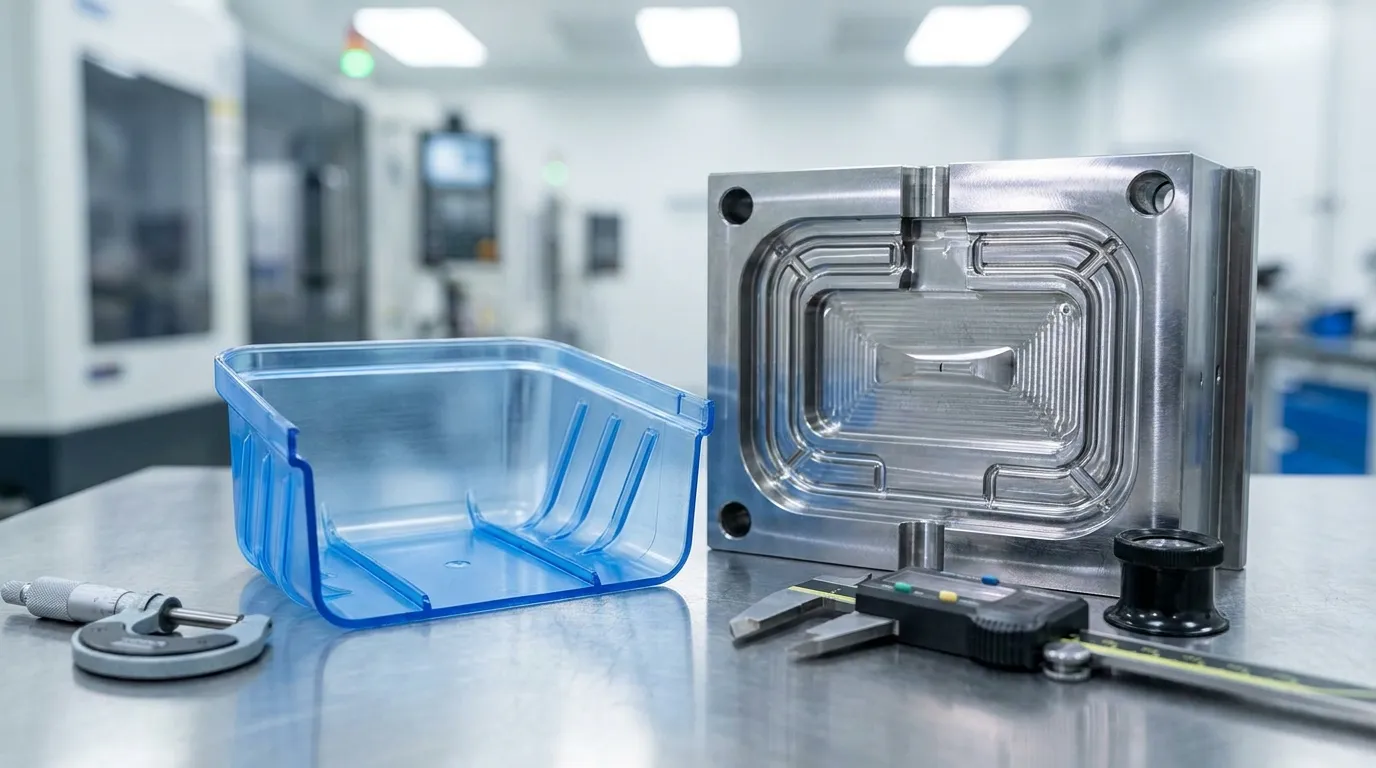
Consistent wall thickness and proper draft angles reduce warping, bekas tenggelam, kilatan, and ejection damage. Small geometry changes early in design often prevent expensive tooling modifications later.
Wall thickness controls how plastic cools and shrinks inside the mold. Large thickness differences create uneven cooling, which often leads to warping, bekas tenggelam, or dimensional variation.
Draft angles help the part release from the mold cleanly. Without enough draft, molded parts can drag across steel surfaces during ejection. That damages cosmetic finishes and increases cycle instability.
Kesalahan geometri umum pada bagian medis
- Bos tebal terhubung ke dinding tipis
- Permukaan kosmetik tanpa draf
- Sudut internal yang tajam
- Tulang rusuk dalam tanpa penyangga yang tepat
- Transisi ketebalan dinding yang tiba-tiba
A catheter component redesign showed how small geometry changes can improve manufacturability. The original design used deep side actions and tight corner transitions. After simplifying the geometry and improving draft angles, the manufacturer reduced tooling lead time and improved molding consistency.
| Aturan Geometri | Praktik yang Direkomendasikan |
|---|---|
| Ketebalan dinding | Tetap seragam mungkin |
| Sudut draf | Tambahkan draf ke semua wajah vertikal |
| Radius sudut | Gunakan transisi yang mulus |
| Ketebalan tulang rusuk | Jaga agar lebih tipis dari dinding yang berdekatan |
| Desain bos | Hindari penumpukan material tebal |
If you need deeper tooling context, Panduan Sunshine Pro untuk desain komponen cetakan explains how part geometry affects mold performance.
How tight should tolerances really be for medical molded parts?
Not every medical molded feature requires ultra-tight tolerances. Over-constraining dimensions increases tooling complexity, inspection costs, and production risk without always improving device performance.
Many engineering teams apply tight tolerances across entire parts instead of focusing on critical dimensions. That approach increases tooling cost and slows production without adding functional value.
Critical dimensions should receive tighter control because they affect assembly, sealing, fluid flow, or patient safety. Cosmetic or non-functional features usually do not need the same tolerance level.
A reusable medical enclosure showed this clearly during production planning. The original drawing specified ±0.02 mm tolerances across several non-critical features. The tighter limits increased tooling complexity and inspection time but did not improve product function. Relaxing those dimensions simplified manufacturing and reduced production risk.
Tighter tolerances are not always safer in medical molding. Excessive dimensional restrictions can actually increase molding instability by narrowing acceptable processing windows.
| Jenis Fitur | Strategi Toleransi yang Direkomendasikan |
|---|---|
| Permukaan penyegelan | Kontrol ketat |
| Antarmuka perakitan | Sedang hingga ketat |
| Fitur kosmetik | Kontrol sedang |
| Permukaan yang tidak berfungsi | Toleransi cetakan standar |
| Bagian fleksibel tipis | Tinjauan yang bergantung pada materi |
Material shrinkage also matters. Polipropilena, polikarbonat, and PEEK behave differently during cooling. Tolerance decisions should match actual molding behavior instead of CAD assumptions.
Long production runs can also create dimensional wear inside tooling. Panduan Sunshine Pro untuk Kontrol keausan cetakan presisi explains how mold wear affects long-term consistency.
Which design mistakes cause molding defects in medical parts?
Many medical molding defects begin with avoidable design decisions. Uneven walls, sudut-sudut tajam, penempatan gerbang yang buruk, and unrealistic tolerances often create quality problems before production even begins.
Defects are often blamed on processing conditions, but part geometry usually creates the root problem. Poor cooling balance, difficult filling paths, and unstable ejection commonly trace back to early design decisions.
Medical parts are especially sensitive because validation requirements leave less room for process variation. A geometry problem that might be acceptable in consumer molding can become a major quality issue in regulated production.
| Cacat | Penyebab Desain Umum |
|---|---|
| Tanda tenggelam | Bagian dinding tebal |
| Melengkung | Pendinginan yang tidak merata |
| Kilat | Geometri penutupan yang buruk |
| Tembakan pendek | Jalur aliran tipis |
| Garis las | Penempatan gerbang yang buruk |
A medical startup experienced a validation delay after selecting material late in the tooling process. The original mold design worked for one resin family but created filling instability after the material switch. That forced redesign work during validation instead of before tooling approval.
Tool durability matters as well. Repeated molding stress, abrasive resins, and tight shutoffs increase wear over time. Panduan Sunshine Pro untuk faktor daya tahan cetakan explains how tooling performance affects long-term molding stability.
What should engineers confirm before medical mold manufacturing starts?
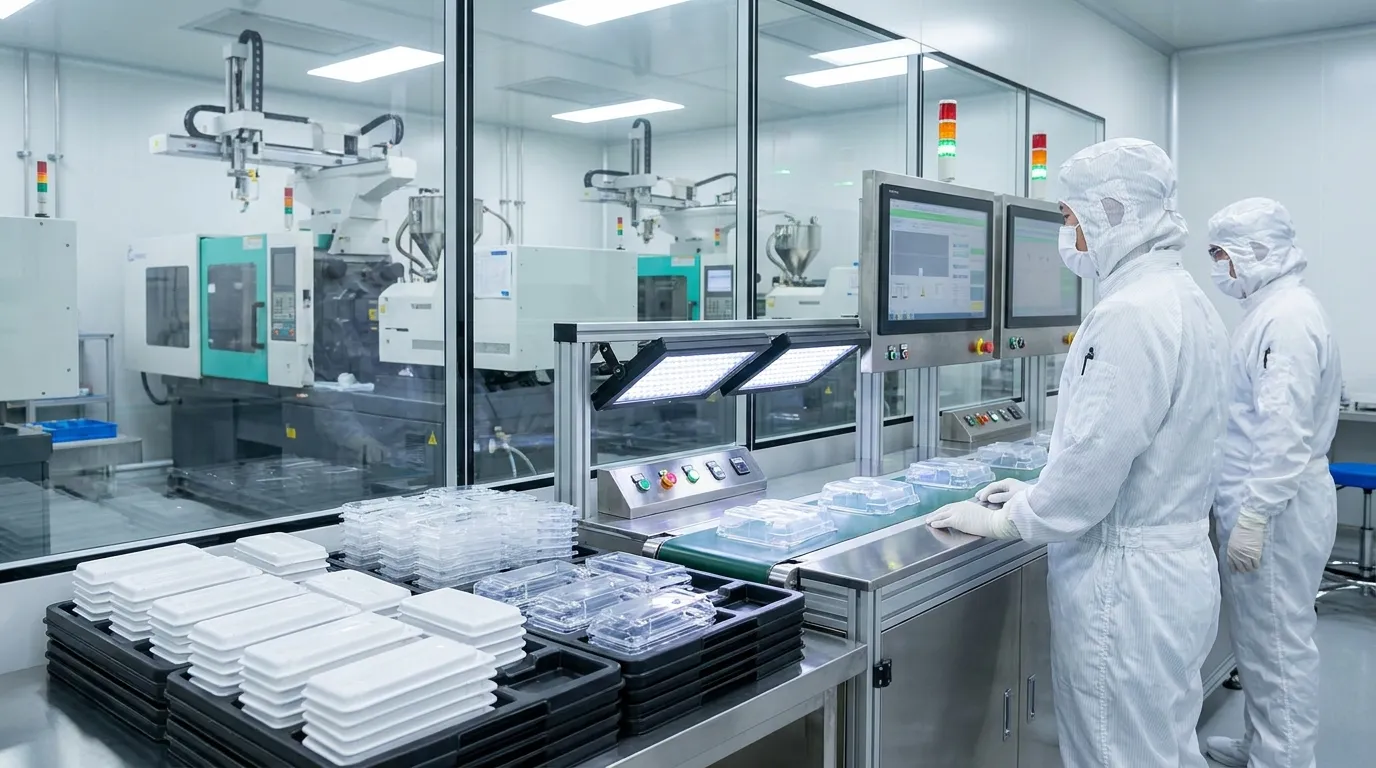
Teams should finalize manufacturability decisions before steel cutting begins. Once tooling enters production, even small design changes can increase lead times, validation work, dan biaya alat.
The most important step is aligning product engineering, perkakas, and manufacturing requirements before approvals are signed. Pemilihan bahan, sterilization strategy, penempatan gerbang, and tolerance expectations should all be reviewed together.
Daftar Periksa Kemampuan Cetakan Bagian Medis
| Item Ulasan Pra-Perkakas | Pemeriksaan Status |
|---|---|
| Geometri CAD diselesaikan | □ |
| Sudut draft dikonfirmasi | □ |
| Ketebalan dinding seragam ditinjau | □ |
| Metode sterilisasi disetujui | □ |
| Pemilihan resin diselesaikan | □ |
| Strategi toleransi ditinjau | □ |
| Lokasi gerbang dievaluasi | □ |
| Persyaratan validasi didokumentasikan | □ |
| Jalur perpisahan disetujui | □ |
| DFM review completed | □ |
Informasi yang dibutuhkan produsen cetakan Anda sebelum persetujuan perkakas
Before tooling starts, provide:
- File CAD akhir
- Spesifikasi bahan
- Persyaratan sterilisasi
- Volume produksi yang diharapkan
- Persyaratan permukaan kosmetik
- Ekspektasi validasi
- Dimensi dan toleransi kritis
Late-stage changes create some of the biggest delays in medical injection molding projects. A material revision or geometry update after tool steel is cut can add weeks to the production schedule.
Tim yang mempersiapkan produksi dapat meninjau Sunshine Pro Persiapan perkakas medis process to better align engineering and manufacturing expectations.
Apa yang Harus Dilakukan Selanjutnya
Medical device plastic injection molding works best when manufacturability drives design decisions from the start. Small geometry adjustments, realistic tolerances, and early sterilization planning can prevent expensive tooling changes later.
Before approving a mold build, review the part from both an engineering and production perspective. Ask whether every feature truly improves function, or simply increases tooling complexity. A cleaner, more stable design usually shortens validation time and improves long-term production consistency.
If your team is still evaluating tooling strategy, pemilihan material, or mold engineering details, use the broader injection mold guides from Sunshine Pro to support the next phase of development.
Pertanyaan yang Sering Diajukan
What plastics are commonly used in medical injection molding?
Polikarbonat, polipropilena, polyethylene, MENGINTIP, and PVC are commonly used in medical injection molding because they offer different balances of durability, chemical resistance, sterilization compatibility, and biocompatibility. The best option depends on the device application and regulatory requirements.
How long does it take to make a medical injection mold?
Production mold timelines commonly range from eight to twenty weeks depending on part complexity, validation requirements, hitungan rongga, and tooling revisions. Design changes during tooling development often create the biggest delays.
Why is DFM important in medical injection molding?
DFM helps engineers identify geometry, toleransi, and tooling risks before manufacturing begins. Early DFM review reduces mold revisions, production defects, and validation delays.
Can sterilization damage injection molded medical parts?
Iya. Some plastics lose strength, discolor, warp, or crack after repeated steam, radiation, or chemical sterilization exposure. Material selection and wall design should account for sterilization early in development.
What causes warping in medical molded parts?
Warping is commonly caused by uneven wall thickness, poor cooling balance, sharp geometry transitions, or material shrinkage variation. Consistent geometry usually improves dimensional stability.
Are tighter tolerances always better for medical parts?
Tidak. Excessively tight tolerances increase tooling complexity, inspection costs, and molding instability. Critical dimensions should receive tighter control while non-critical features should remain manufacturable.
Bagikan:


Ditulis oleh Sunshine
di Sunshine, Kami adalah produsen dan pemasok profesional komponen cetakan presisi, menawarkan berbagai produk untuk aplikasi stamping dan cetakan injeksi. Fokus utama kami adalah mencetak cetakan, pin dan lengan ejector, serta tiang panduan dan bushing. Dengan pemesinan CNC canggih, kontrol kualitas ketat, dan kemampuan produksi yang kuat, kami memastikan keandalan, suku cadang presisi tinggi, bersama dengan komponen standar yang tersedia untuk pasokan global yang cepat dan efisien.
BERITA
DAPATKAN LAYANAN
Dengan suku cadang berkualitas untuk memenuhi setiap anggaran dan staf ramah yang terlatih untuk membuat kunjungan Anda menjadi informatif dan tanpa repot.
