



Komponen Cetakan Die: Panduan Seleksi untuk Alat Stamping Tahan Lama
Die mold components control stamping accuracy, stabilitas penyelarasan, and tooling lifespan. Choosing the right guide posts, bushing, pukulan, and wear-resistant materials helps reduce downtime and improve repeatable production. Most early tooling failures come from poor alignment, incorrect material selection, or weak maintenance planning. Standard components work well for many production lines, while custom parts are better for specialized tolerances or high-load applications.
Stamping tools fail faster when components are mismatched to production conditions. A guide system with poor alignment can wear out punches early, while overly hard tooling materials may crack under repeated impact. Buyers need more than a parts catalog. They need a selection framework that balances durability, sourcing speed, pemeliharaan, and repeatable performance.
What are die mold components and why do they affect stamping durability?
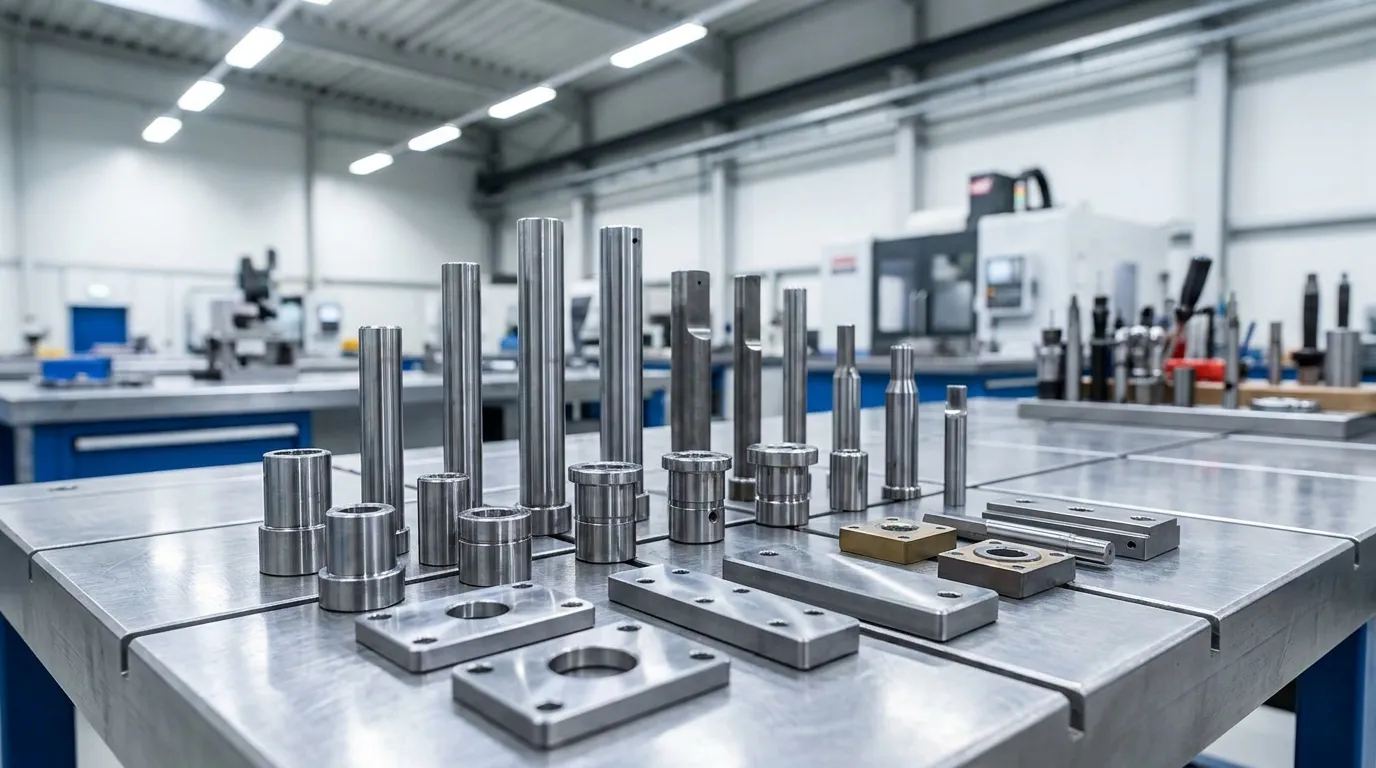
Die mold components directly affect stamping accuracy, ketahanan aus, and tooling lifespan. Sistem panduan, pukulan, and bushings must work together to maintain alignment and repeatable production under high-cycle operation.
Die mold components are the precision parts inside a stamping tool that guide movement, control alignment, and shape material during production. Common examples include punches, ini, tiang panduan, bushing, sistem ejector, pelat aus, and sleeves.
When one component wears unevenly, the entire tooling system can drift out of tolerance. That creates burrs, variasi dimensi, and unnecessary downtime. In high-cycle stamping lines, even small alignment errors become expensive over time.
Many buyers focus only on hardness or material grade. That approach misses a bigger issue. Long-term stamping performance depends on how well components work together under load, kecepatan, dan benturan berulang.
| Komponen | Fungsi utama | Dampak Daya Tahan |
|---|---|---|
| Pukulan | Bentuk atau potong bahan | Paparan keausan tinggi |
| Pos panduan | Pertahankan keselarasan | Mencegah keausan yang tidak merata |
| Bushing | Mengurangi gesekan | Meningkatkan stabilitas gerakan |
| Pelat keausan | Lindungi permukaan | Memperpanjang masa pakai alat |
| Sistem ejektor | Hapus bagian yang dicap | Mengurangi gangguan produksi |
For a broader overview of tooling structures and systems, lihat ini Panduan Komponen Cetakan dan jelajahi terkait Sistem komponen mati.
Which die mold components have the biggest impact on tool life?
Pos panduan, bushing, pukulan, and wear-resistant inserts typically determine tool lifespan more than secondary accessories. Poor alignment or inadequate hardness increases friction, pergeseran dimensi, and premature failure during repeated stamping cycles.
Guide systems usually have the biggest effect on long-term durability because they control movement accuracy. If alignment drifts even slightly, punches and dies begin wearing unevenly. That shortens service life and increases replacement frequency.
Punch material also matters, especially in high-volume stamping. Harder materials improve wear resistance, but higher hardness is not always better. Extremely hard punches can become brittle under repeated impact loads and may crack earlier than tougher materials with lower hardness.
A high-cycle automotive stamping line provides a good example. One manufacturer replaced guide bushings every two months because alignment tolerance was too loose. After tightening guide fit tolerances and improving lubrication control, the replacement cycle extended significantly without changing punch material.
| Komponen | Penyebab Kegagalan Umum | Efek pada Masa Pakai Alat |
|---|---|---|
| Pos panduan | Ketidaksejajaran | Keausan yang tidak merata |
| Bushing | Gesekan dan kontaminasi | Akurasi yang berkurang |
| Pukulan | Kerapuhan atau keausan | Retak dan waktu henti |
| Sisipan kepakai | Kelelahan permukaan | Interval perawatan yang lebih pendek |
| Mata air | Kelelahan kompresi | Pengoperasian yang tidak konsisten |
Pembeli yang membandingkan toleransi dan ketahanan aus juga harus meninjau ini Komponen cetakan presisi for tighter production requirements.
How do you choose guide posts and bushings for repeatable alignment?
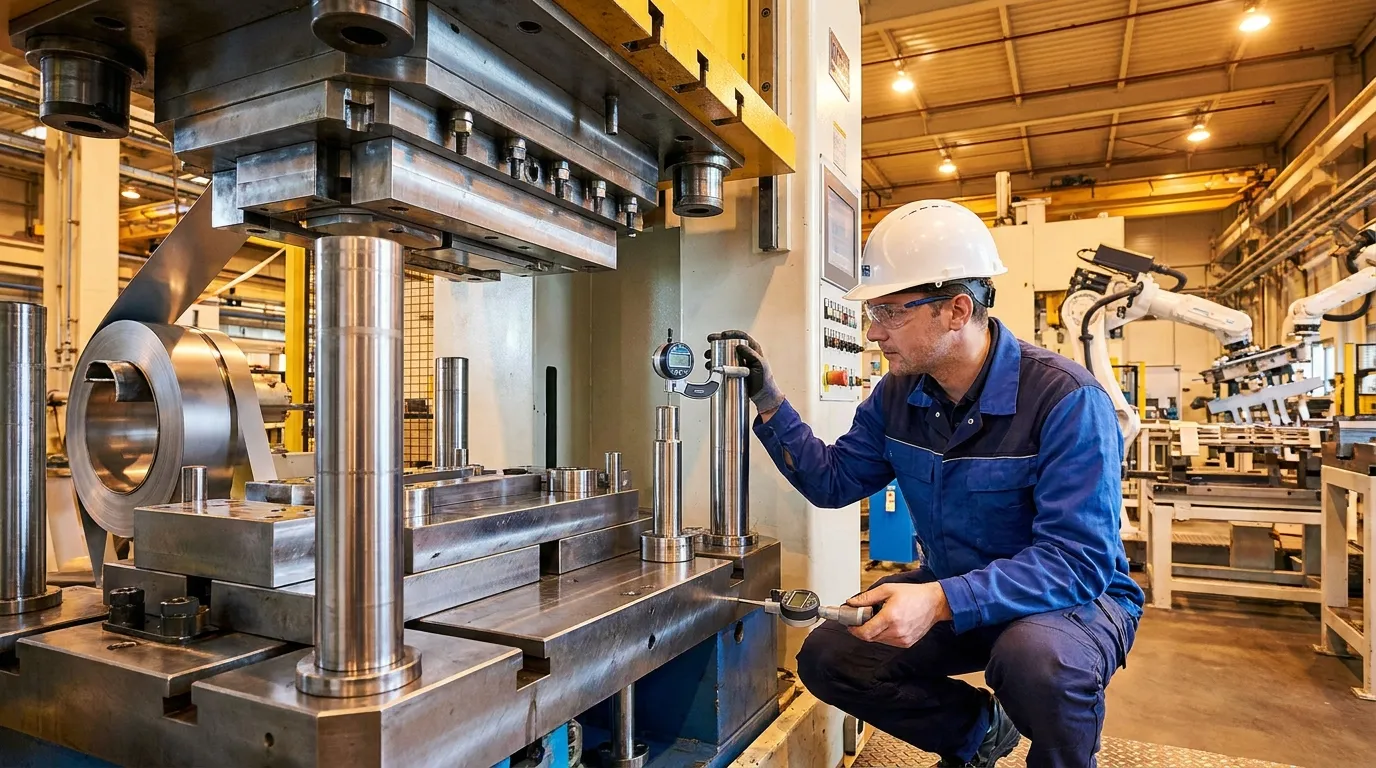
Guide posts and bushings should match production load, stamping speed, dan persyaratan toleransi. Tight alignment control reduces uneven wear, protects punches, and improves repeatable part accuracy over long production runs.
Guide systems should be selected based on operating conditions, not just catalog dimensions. High-speed stamping lines usually require tighter fit tolerances and smoother surface finishes to reduce friction and vibration.
Poor alignment creates a chain reaction. Bushings wear faster, punches shift slightly off-center, and stamped parts lose dimensional consistency. In severe cases, the die set can crack from uneven stress distribution.
Toleransi jarak bebas dan kesesuaian
Tighter clearances improve alignment accuracy, but excessive tightness can increase friction and lubrication problems. The best balance depends on cycle speed, stamping load, and contamination exposure.
Standard guide systems often perform well for medium-volume production because replacement parts are easier to source. Fully custom systems are usually reserved for specialized tolerances or unusual tooling geometry.
| Kondisi Produksi | Pendekatan yang Direkomendasikan |
|---|---|
| Stamping volume sedang | Sistem panduan standar |
| Produksi berkecepatan tinggi | Bushing yang pas dengan presisi |
| Beban benturan berat | Bahan panduan yang lebih tangguh |
| Lingkungan yang terkontaminasi | Desain pelumasan yang ditingkatkan |
Pemilihan bahan dan permukaan akhir
Surface finish affects wear more than many buyers expect. Rough surfaces increase friction and accelerate bushing wear, especially during long production runs.
A manufacturer that switched from fully custom guide systems to stocked standard assemblies reduced downtime because replacement inventory became easier to maintain. Faster replacement availability often matters more operationally than small precision gains.
For commonly stocked assemblies and replacement availability, tinjau ini Bagian Sistem Panduan.
What materials work best for high-cycle stamping applications?
The best die mold component material depends on stamping force, volume produksi, dan kondisi keausan. Harder materials improve wear resistance, but excessive hardness can increase brittleness and shorten component life under impact loads.
Tool steel remains the most common material for punches, ini, and wear components because it balances hardness, ketangguhan, dan stabilitas pemesinan. Heat treatment also plays a major role. Two components made from the same steel can perform very differently after processing.
Many buyers assume maximum hardness guarantees maximum durability. Itu tidak selalu benar. A stamping operation using extremely hard punch materials experienced repeated cracking because the tooling absorbed heavy impact loads during each cycle.
Tabel Keputusan Pemilihan Komponen Die
| Volume produksi | Beban Stamping | Fokus Material yang Direkomendasikan | Standar atau Kustom |
|---|---|---|---|
| Volume rendah | Cahaya | Baja perkakas umum | Standar |
| Volume sedang | Sedang | Baja aus yang diberi perlakuan panas | Standar |
| Volume tinggi | Berat | Ketahanan aus tinggi dengan ketangguhan | Kustom saat diperlukan |
| Stamping presisi | Sedang | Baja perkakas toleransi ketat | Kustom |
| Stamping bahan abrasif | Berat | Baja tahan aus yang ditingkatkan | Kustom |
Heat treatment quality matters as much as material grade. Poor heat treatment creates inconsistent hardness, kelelahan permukaan, and uneven wear patterns.
Replacement planning also affects material decisions. Some manufacturers choose slightly lower hardness materials because they are easier to machine, faster to replace, and less prone to cracking.
Pembeli yang merencanakan inventaris pemeliharaan dapat membandingkan tersedia suku cadang cetakan pengganti sebelum menyelesaikan spesifikasi.
When should you use standard components instead of custom parts?
Standard die mold components reduce sourcing time and replacement delays for most applications. Custom parts become necessary when tolerance, geometri, or production load requirements exceed standard component limitations.
Standard components work well in many stamping operations because they simplify sourcing, pemeliharaan, dan perencanaan inventaris. Replacement parts are easier to stock, and production downtime is usually shorter when failures occur.
Custom components make sense when production requirements exceed standard tolerances or when tooling geometry is highly specialized. Precision electronics stamping and complex automotive applications often fall into this category.
Custom die components are not automatically higher quality. Standard parts are often the safer operational choice when replacement speed matters more than extreme precision.
Tabel Seleksi Standar vs Kustom
| Situasi | Pilihan yang Lebih Baik | Alasan utama |
|---|---|---|
| Stamping umum | Standar | Sumber yang lebih cepat |
| Penggantian yang sering | Standar | Perencanaan inventaris yang lebih mudah |
| Persyaratan toleransi ekstrem | Kustom | Kontrol presisi |
| Geometri khusus | Kustom | Lebih pas |
| Produksi multi-situs global | Standar | Ketersediaan yang konsisten |
Lead time is another factor. According to manufacturing timeline analysis from Teknik Ulitech, tooling revisions and component delays often extend production schedules more than buyers initially expect.
For common stocked options, compare available Bagian cetakan standar.
Why do die mold components fail earlier than expected?
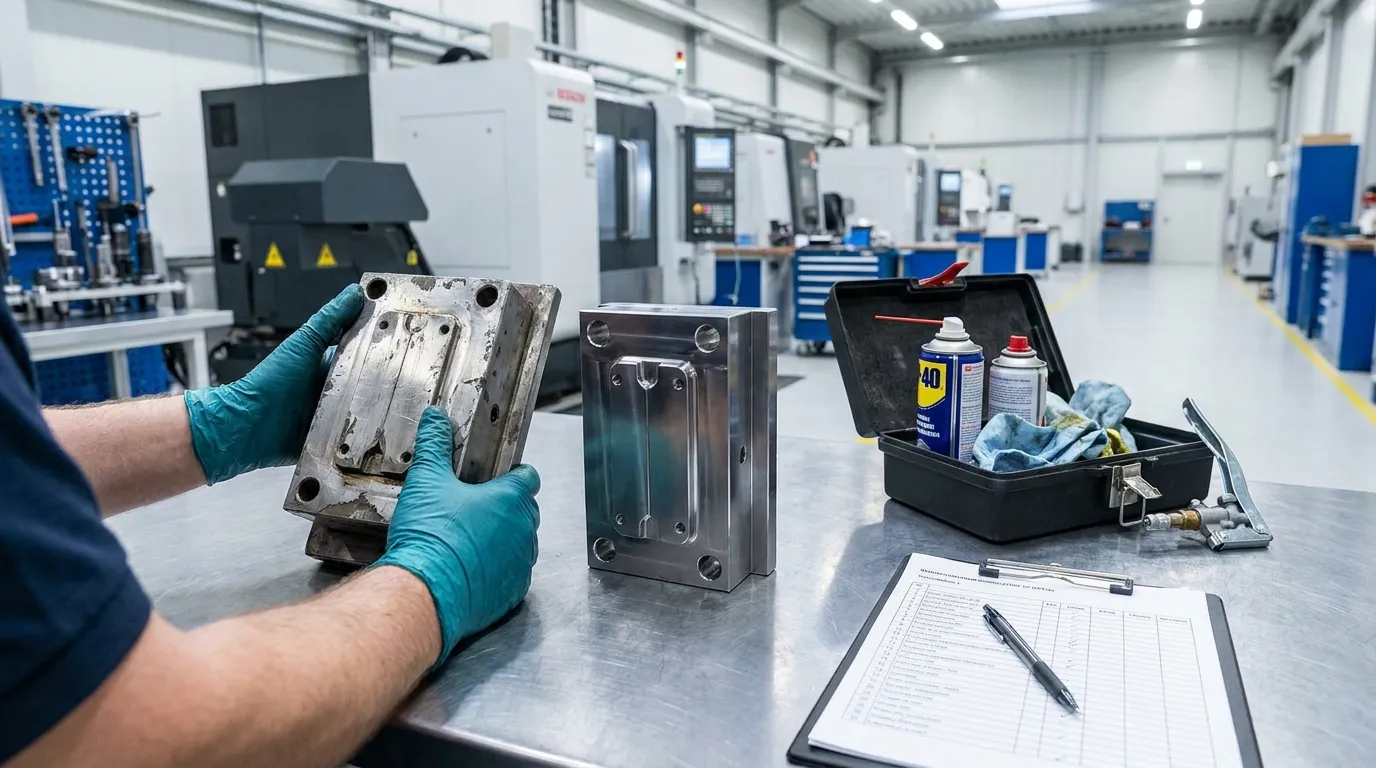
Most premature die component failures are caused by alignment problems, pelumasan yang tidak memadai, Kontaminasi, or incorrect material selection. Preventive maintenance and proper fit tolerance usually extend tool life more effectively than simply choosing harder materials.
Misalignment is one of the biggest causes of premature wear. Even small guide system movement creates uneven loading across punches and bushings. Seiring waktu, that increases friction and dimensional drift.
Contamination is another common issue. Metal particles and debris can damage bushings quickly if lubrication systems are inconsistent or poorly maintained.
Daftar Periksa Pemecahan Masalah Kegagalan Dini
| Gejala Kegagalan | Kemungkinan Penyebab | Langkah Inspeksi | Perbaikan yang Direkomendasikan |
|---|---|---|---|
| Keausan pukulan yang tidak merata | Ketidaksejajaran | Periksa izin pemandu | Sesuaikan toleransi kesesuaian |
| Penilaian bushing | Pelumasan yang buruk | Periksa aliran pelumasan | Tingkatkan jadwal pelumasan |
| Retak pukulan | Kekerasan yang berlebihan | Tinjau spesifikasi bahan | Meningkatkan keseimbangan ketangguhan |
| Kelelahan permukaan | Kontaminasi | Periksa paparan kotoran | Tingkatkan rutinitas pembersihan |
| Penyimpangan dimensi | Sistem panduan yang aus | Mengukur akurasi penyelarasan | Ganti pemandu yang aus |
Many tooling failures blamed on material quality actually start with maintenance problems. Regular inspection schedules usually prevent larger failures before production stops.
A preventive maintenance program that checks alignment, pelumasan, and surface wear at fixed intervals often reduces replacement costs more effectively than upgrading every component material.
Operasi yang berurusan dengan toleransi ketat dapat meninjau ini Suku cadang perkakas presisi tinggi for improved alignment consistency.
How should buyers evaluate suppliers and lead times?
Supplier evaluation should focus on delivery consistency, dukungan inventaris, kontrol kualitas, dan ketersediaan pengganti. A low component price means little if replacement delays stop production for weeks.
Global buyers also need to consider customs processing and shipping documentation. Import delays caused by incomplete paperwork can extend lead times significantly. Recent customs guidance from Bea Cukai Bangladesh dan analisis logistik dari EximAgent AI show that documentation errors remain a major cause of shipment delays.
Pertanyaan untuk ditanyakan kepada pemasok
- Do they stock replacement inventory locally?
- Can they maintain consistent tolerances across batches?
- What is the average replacement lead time?
- Do they provide inspection reports?
- How do they handle urgent replacement requests?
One manufacturer experienced several weeks of downtime because replacement guide components were unavailable during a production spike. After switching to a supplier with stocked standard assemblies, the company reduced replacement delays and stabilized scheduling.
Supplier quality control also matters during production launch. Manufacturing analysis from HH Molds Inc. highlights how inspection planning affects tooling consistency and long-term production stability.
For broader sourcing considerations and tooling categories, tinjau ini Sumber komponen perkakas.
What maintenance practices extend die mold component lifespan?
Regular inspection, kontrol pelumasan, and planned replacement schedules extend component lifespan more effectively than reactive repairs. Most long-term tooling problems develop gradually before major failures appear.
Maintenance teams should track wear patterns instead of waiting for visible damage. Small alignment shifts can create uneven punch loading long before production defects become obvious.
Daftar Periksa Pemeliharaan yang Direkomendasikan
- Periksa keselarasan panduan pada interval yang dijadwalkan
- Bersihkan kotoran dari permukaan yang bergerak secara teratur
- Pantau konsistensi pelumasan
- Ganti bushing yang aus sebelum penyimpangan toleransi menyebar
- Simpan komponen pengganti yang tersedia
- Catat pola keausan berulang untuk penyesuaian di masa mendatang
A scheduled inspection program helped one stamping operation reduce premature punch wear after identifying uneven guide loading early. The company avoided a larger die failure because technicians corrected alignment before cracks developed.
Memelihara cadangan inventaris perkakas cadangan also shortens recovery time when failures happen unexpectedly.
Mendapatkan Langkah Selanjutnya dengan Benar
Choosing the right die mold components is about balancing precision, daya tahan, sourcing speed, dan kepraktisan perawatan. Buyers who focus only on hardness or upfront cost often miss the operational factors that affect long-term tooling performance.
Start by evaluating alignment stability, volume produksi, replacement lead times, and maintenance requirements together. Standard components may provide the best long-term value for many stamping lines, especially when replacement speed matters. For tighter tolerances or specialized production demands, custom tooling can still be the better fit when managed carefully.
Pertanyaan yang Sering Diajukan
What are die mold components?
Die mold components are the precision parts used inside stamping tools to guide movement, shape material, and maintain alignment during production. Common examples include punches, tiang panduan, bushing, sistem ejector, and wear-resistant inserts.
What components affect stamping accuracy the most?
Pos panduan, bushing, and punches have the biggest effect on stamping accuracy because they control alignment and dimensional consistency. Worn or poorly matched components often cause uneven wear, burr, dan pergeseran dimensi.
What material is best for stamping dies?
The best material depends on production volume, beban benturan, dan kondisi keausan. Tool steels with proper heat treatment usually balance hardness, ketangguhan, and wear resistance better than overly hardened materials.
When should custom die components be used?
Custom die components are best when standard parts cannot meet tolerance, geometri, or production-load requirements. They are commonly used in high-precision or specialized stamping applications.
Why do die components wear out early?
Most premature wear comes from misalignment, pelumasan buruk, Kontaminasi, or incorrect material selection. Preventive maintenance and accurate fit tolerances usually improve lifespan more than increasing hardness alone.
How do you improve mold life?
Mold life improves when components are properly aligned, regularly lubricated, and inspected before excessive wear develops. Scheduled replacement planning also reduces sudden production failures.
Bagikan:


Ditulis oleh Sunshine
di Sunshine, Kami adalah produsen dan pemasok profesional komponen cetakan presisi, menawarkan berbagai produk untuk aplikasi stamping dan cetakan injeksi. Fokus utama kami adalah mencetak cetakan, pin dan lengan ejector, serta tiang panduan dan bushing. Dengan pemesinan CNC canggih, kontrol kualitas ketat, dan kemampuan produksi yang kuat, kami memastikan keandalan, suku cadang presisi tinggi, bersama dengan komponen standar yang tersedia untuk pasokan global yang cepat dan efisien.
BERITA
DAPATKAN LAYANAN
Dengan suku cadang berkualitas untuk memenuhi setiap anggaran dan staf ramah yang terlatih untuk membuat kunjungan Anda menjadi informatif dan tanpa repot.
