



Komponen Cetakan Plastik: Bagian Standar, Bagian Kustom, dan Penggunaan
Plastic mold components include standard parts like ejector pins and guide bushings, plus custom-engineered parts built for specialized molds. Standard components reduce lead times and simplify maintenance, while custom components improve precision, pendinginan, and geometry control for demanding applications such as automotive, medis, and electronics manufacturing.
Choosing the right mold components affects more than tooling cost. It changes maintenance schedules, production downtime, kecepatan penggantian, and product quality. Some molds work perfectly with off-the-shelf components, while others need custom machining to hit strict tolerances or support complex part geometry. Understanding where each option fits helps buyers avoid unnecessary delays and expensive redesigns.
What are plastic mold components?
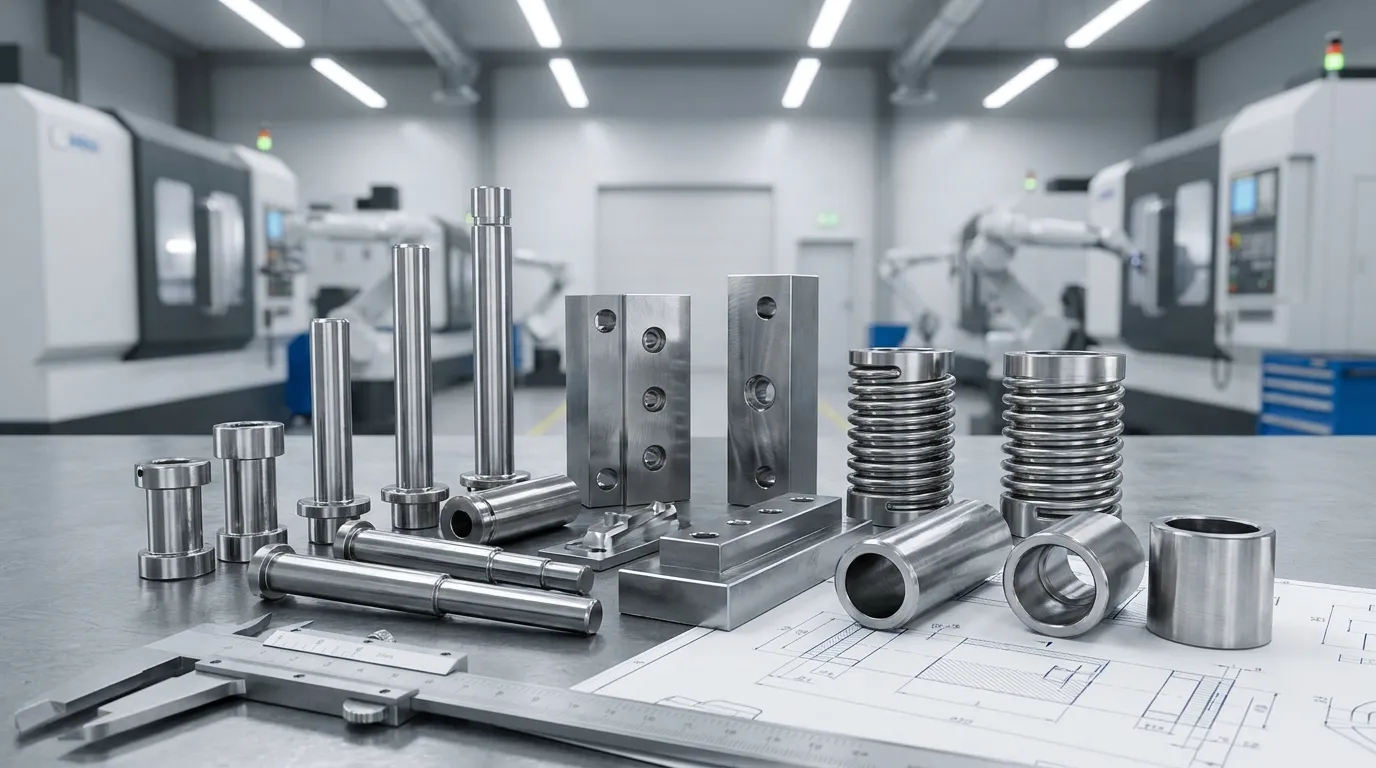
Plastic mold components are the individual precision parts that make up an injection mold system, termasuk pin ejector, busing panduan, sisipan, penggeser, and cooling elements. Their accuracy directly affects mold lifespan, production consistency, and finished part quality.
Every injection mold contains dozens or even hundreds of individual parts. Some guide mold movement, some release finished products, and others control cooling or alignment. These parts must work together with tight tolerances to prevent flash, melengkung, or premature wear.
Common component categories include:
| Jenis Komponen | Fungsi utama |
|---|---|
| Pin ejektor | Dorong bagian jadi keluar dari cetakan |
| Tiang pemandu dan bushing | Jaga agar bagian cetakan tetap sejajar |
| Sisipan | Bentuk geometri bagian terperinci |
| Penggeser dan pengangkat | Buat fitur samping atau undercut |
| Saluran pendingin | Kontrol suhu cetakan |
| Lengan | Mendukung komponen bergerak |
High-volume molds depend heavily on component consistency. A worn guide bushing or damaged ejector pin can stop production quickly. That’s why many manufacturers standardize replacement parts whenever possible.
For a broader breakdown of complete mold systems, lihat ini Panduan Komponen Cetakan Lengkap dan jelajahi terkait Sistem cetakan plastik.
Which mold components are usually standard parts?
Standard mold components are mass-produced precision parts built to common industry dimensions. They reduce lead times, mempermudah perawatan, and make replacement easier during high-volume production.
Most injection molds use standard components for basic movement and alignment functions. These parts are widely available from industrial suppliers and usually come in pre-defined sizes and materials.
Common standard mold parts include:
| Komponen Standar | Mengapa Produsen Menggunakannya |
|---|---|
| Pin ejektor | Penggantian mudah selama pemakaian |
| Bushing panduan | Penyelarasan yang konsisten |
| Pos panduan | Sumber cepat |
| Mengembalikan pin | Ukuran standar yang andal |
| Mata air | Performa yang dapat diprediksi |
| Lengan | Biaya pemesinan yang lebih rendah |
Standardization matters most in molds with long production runs. If a guide post wears out after several million cycles, a replacement can often ship immediately instead of being custom-machined from scratch.
Standard components are not always the cheapest long-term option, meskipun. In high-precision molds, repeated performance compromises can create more maintenance costs than a properly engineered custom part. Buyers sometimes focus too heavily on initial tooling savings and ignore future production stability.
Produsen yang membangun produk konsumen komoditas sering sangat bergantung pada Bagian cetakan standar because replacement speed matters more than aggressive optimization.
When are custom mold components necessary?
Custom mold components become necessary when standard parts cannot meet geometry, toleransi, pendinginan, or production requirements. Complex consumer electronics, perangkat medis, and automotive programs commonly require custom inserts, Warna, or sliders.
Custom components solve problems that standard parts cannot handle. Tight spaces, unusual product geometry, and strict tolerance requirements often force mold designers to create specialized tooling.
Aplikasi presisi tinggi
Medical and automotive molds commonly use custom inserts or custom cooling layouts. These applications require tight dimensional consistency and stable cycle times. According to this guide on Persyaratan pencetakan injeksi medis, medical programs often require stricter process validation and tooling precision than standard commercial products.
A medical device housing may need custom core geometry to maintain wall thickness tolerance across several cavities. Standard inserts alone may not provide enough control.
Geometri cetakan yang kompleks
Consumer electronics molds often contain thin walls, memotong, and cosmetic surfaces that increase tooling complexity. A standard slider or insert may not fit the available space.
Misalnya, an automotive dashboard mold may use custom cooling inserts to reduce warpage across large plastic surfaces. Better cooling control can shorten cycle times and improve dimensional consistency.
Custom mold components are often unnecessary for low-volume consumer products. Many projects become over-engineered because buyers assume “custom” automatically means “better.” In reality, standard parts work well for many simple geometries.
If you need a deeper look at specialized tooling setups, explore perkakas cetakan khusus.
Komponen cetakan standar vs custom: what is the real difference?
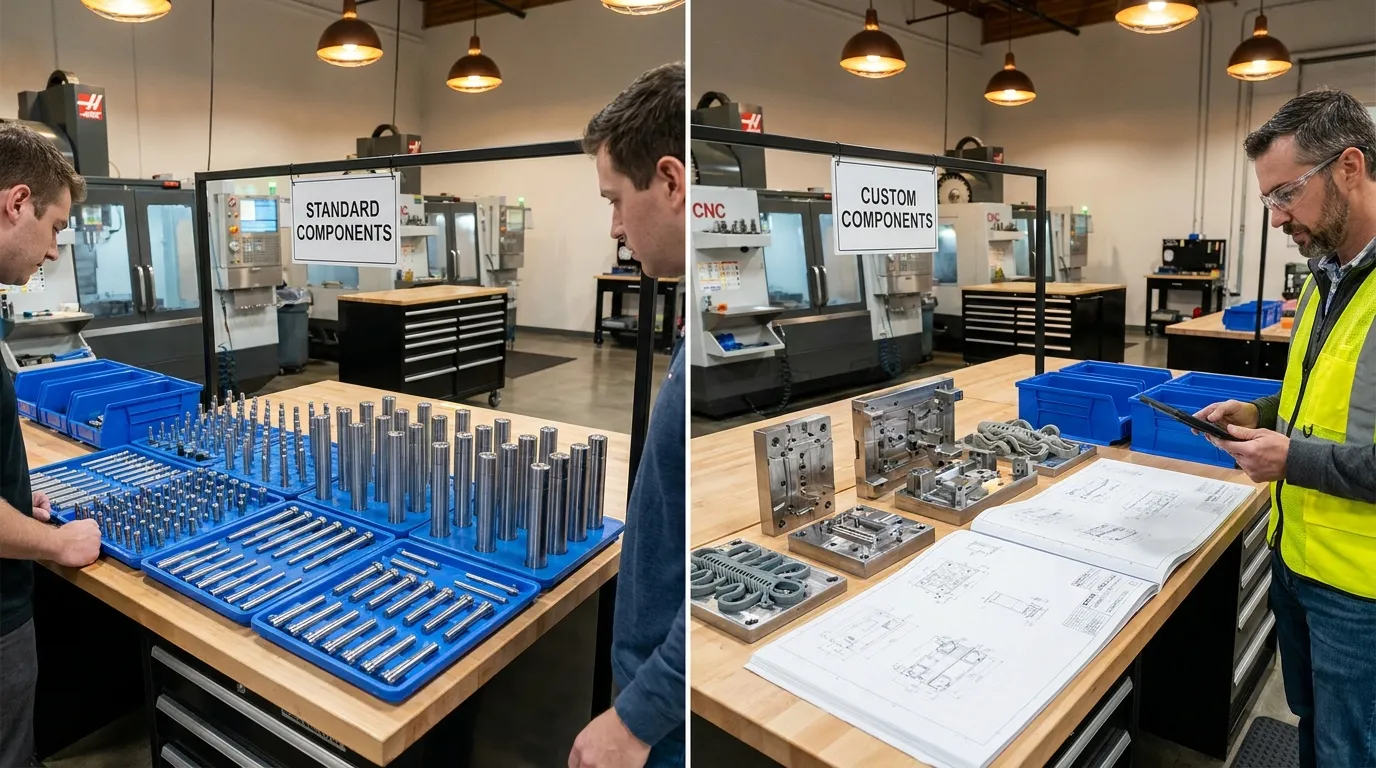
Standard mold components are faster and cheaper to source, while custom components offer better optimization for specialized mold designs. Pilihan yang tepat tergantung pada volume produksi, persyaratan presisi, and future maintenance priorities.
The biggest difference comes down to flexibility versus convenience. Standard parts simplify sourcing and repairs. Custom parts improve mold performance in situations where standard dimensions create limitations.
| Faktor | Komponen Standar | Komponen Kustom |
|---|---|---|
| Waktu tunggu | Lebih pendek | Lebih lama |
| Kecepatan penggantian | Hampir | Lebih lambat |
| Biaya di muka | Lebih rendah | Lebih tinggi |
| Fleksibilitas desain | Terbatas | Tinggi |
| Pemeliharaan | Lebih mudah | Lebih kompleks |
| Optimasi presisi | Sedang | Lebih tinggi |
A consumer packaging mold running millions of cycles per year may prioritize standard guide bushings because maintenance downtime costs more than small performance gains. Dilain pihak, a medical mold may accept longer lead times to achieve tighter process control.
Tabel Keputusan Standar vs Kustom
| Situasi Produksi | Pilihan yang Lebih Baik | Alasan |
|---|---|---|
| Produk komoditas volume tinggi | Standar | Penggantian lebih cepat |
| Bagian medis toleransi ketat | Kustom | Kontrol presisi yang lebih baik |
| Perkakas prototipe | Standar | Biaya awal yang lebih rendah |
| Potongan yang kompleks | Kustom | Fleksibilitas geometri |
| Lingkungan perawatan yang sering | Standar | Perencanaan inventaris yang lebih mudah |
| Suku cadang elektronik dinding tipis | Kustom | Pendinginan dan dukungan yang ditingkatkan |
Many buyers assume custom tooling always creates better molds. Itu tidak selalu benar. Faster delivery matters more than extreme optimization in many production environments, especially when production schedules are tight.
For broader part selection guidance, tinjau ini pemilihan bagian cetakan resource.
How do standard and custom parts affect lead times and maintenance?
Standard components usually shorten mold build and repair timelines because replacements are readily available. Custom components can improve mold performance, but they often increase machining time, supplier dependency, and maintenance planning complexity.
Lead time differences become obvious during mold repair or production emergencies. A standard ejector pin can often be replaced immediately from inventory. A custom-machined insert may require additional machining, perlakuan panas, and inspection before installation.
Menurut artikel ini tentang waktu tunggu cetakan injeksi, tooling revisions and manufacturing complexity can significantly extend project schedules. Custom mold components increase that risk because every revision may require additional machining work.
Risiko waktu henti penggantian
Maintenance planning becomes more difficult when molds depend heavily on custom components.
- Are replacement parts stocked locally?
- Does the supplier maintain machining capacity?
- Will heat treatment add delays?
- Are inspection approvals required before shipment?
- Can another supplier reproduce the part quickly?
A consumer electronics manufacturer using standard ejector pins can often source replacements globally. A custom insert with proprietary geometry may stop production for weeks if the original supplier cannot deliver quickly.
Import and customs issues can also affect schedules. Documentation or inspection problems may delay tooling shipments during international transport, especially for highly specialized mold components. The Bangladesh customs instruction update for 2025-2026 highlights how documentation handling can affect industrial import timelines.
Produsen yang memprioritaskan waktu aktif sering menyimpan inventaris suku cadang cetakan pengganti for high-wear components.
Which industries rely most on custom mold components?
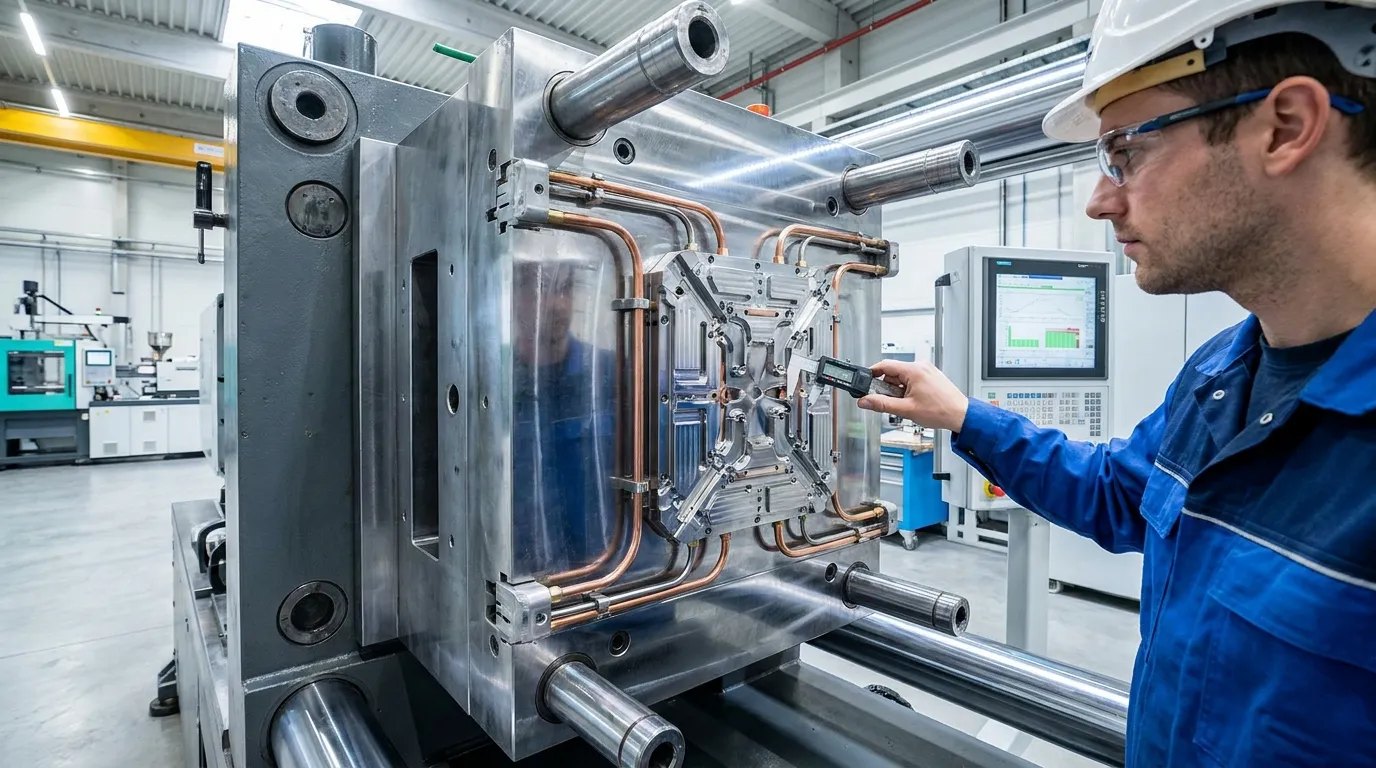
Different industries use different tooling strategies. High-volume commodity products often rely on standardization, while precision industries depend more heavily on custom engineering.
| Industri | Strategi Komponen Khas |
|---|---|
| Medis | Sisipan dan pendinginan khusus |
| Otomotif | Geometri dan daya tahan khusus |
| Elektronik konsumen | Perkakas kustom dinding tipis |
| Kemasan | Penggunaan suku cadang standar yang berat |
| Produk rumah tangga | Sebagian besar komponen standar |
| Dirgantara | Perkakas khusus presisi tinggi |
Medical molds need stable dimensional control and repeatability. Automotive tooling often requires custom cooling layouts to manage large molded surfaces and complex geometries.
Packaging manufacturers usually favor standard components because production speed and fast maintenance matter most. Replacing worn guide bushings quickly can prevent expensive line stoppages.
Anda dapat menjelajahi lebih luas Aplikasi cetakan injeksi to see how tooling strategies change across industries.
How should buyers choose between standard and custom mold components?
Buyers should prioritize standard components when fast replacement, lower cost, and shorter lead times matter most. Custom components make more sense when production demands specialized geometry, toleransi yang lebih ketat, or optimized mold performance.
The best choice depends on production goals, maintenance expectations, and product complexity. Many successful molds use a mix of standard and custom parts instead of choosing only one approach.
Bagan Alur Pemilihan Komponen Cetakan
| Jika prioritasmu adalah... | Choose... |
|---|---|
| Perbaikan lebih cepat | Komponen standar |
| Biaya awal yang lebih rendah | Komponen standar |
| Toleransi ketat | Komponen kustom |
| Geometri kompleks | Komponen kustom |
| Manajemen inventaris yang lebih mudah | Komponen standar |
| Pengoptimalan waktu siklus | Komponen kustom |
Pertanyaan untuk ditanyakan kepada pemasok cetakan Anda
Sebelum menyetujui alat, buyers should ask practical sourcing questions:
- Can replacement parts be sourced globally?
- Which components are fully custom?
- What are the expected replacement lead times?
- Are spare inserts recommended?
- Which parts experience the most wear?
Menurut panduan sumber ini dari Grup Rodon, supplier communication and tooling planning directly affect production reliability and long-term costs.
A balanced tooling strategy often works best. Standard guide components can reduce maintenance delays, while custom inserts handle specialized geometry or cooling demands.
For broader tooling decisions and mold architecture planning, tinjau ini Panduan cetakan injeksi plastik dan terkait panduan komponen cetakan.
Mendapatkan Langkah Selanjutnya dengan Benar
Choosing the right plastic mold components is less about following a fixed rule and more about matching tooling decisions to production reality. Standard parts simplify sourcing, repairs, and inventory planning. Custom parts improve performance when molds require tighter tolerances, specialized cooling, or difficult geometry.
Many successful projects combine both approaches. Standard components handle wear and maintenance efficiency, while custom inserts or sliders solve design-specific problems. Sebelum menyetujui alat, review replacement timelines, maintenance risks, and long-term production goals with your supplier. That process usually prevents more problems than chasing the lowest upfront tooling cost.
Pertanyaan yang Sering Diajukan
What are the most common plastic mold components?
The most common plastic mold components include ejector pins, tiang panduan, bushing, lengan, sisipan, saluran pendingin, and sliders. These parts guide, cool, align, and release molded products during production cycles.
Are custom mold components more expensive?
Iya, custom mold components usually cost more because they require specialized machining, engineering, dan pekerjaan inspeksi. They can still provide value when a project needs tighter tolerances or specialized mold geometry.
Can standard mold components be replaced easily?
Standard mold components are easier to replace because they follow common industry dimensions and are widely available from suppliers. This helps reduce downtime during mold maintenance and emergency repairs.
Which industries use custom mold components most often?
Medis, otomotif, and consumer electronics manufacturers commonly use custom mold components. These industries often require tighter tolerances, specialized cooling, or complex product geometry that standard parts cannot support.
Do custom mold parts increase lead times?
Custom mold parts often increase lead times because they require machining, perlakuan panas, and additional inspection processes. Design revisions can extend schedules even further during mold manufacturing.
Komponen cetakan mana yang paling cepat aus?
Pin ejektor, penggeser, busing panduan, and other moving wear surfaces typically wear out fastest because they experience constant friction during mold cycles. Proper maintenance and material selection help extend service life.
Bagikan:


Ditulis oleh Sunshine
di Sunshine, Kami adalah produsen dan pemasok profesional komponen cetakan presisi, menawarkan berbagai produk untuk aplikasi stamping dan cetakan injeksi. Fokus utama kami adalah mencetak cetakan, pin dan lengan ejector, serta tiang panduan dan bushing. Dengan pemesinan CNC canggih, kontrol kualitas ketat, dan kemampuan produksi yang kuat, kami memastikan keandalan, suku cadang presisi tinggi, bersama dengan komponen standar yang tersedia untuk pasokan global yang cepat dan efisien.
BERITA
DAPATKAN LAYANAN
Dengan suku cadang berkualitas untuk memenuhi setiap anggaran dan staf ramah yang terlatih untuk membuat kunjungan Anda menjadi informatif dan tanpa repot.
