



Suku Cadang Standar Cetakan: Jenis-jenis, Ukuran, dan Kapan Kustomisasi
Mold standard parts are pre-sized mold components used in injection molds and tooling systems to reduce lead time, mempermudah perawatan, and lower replacement costs. Standard parts work well for most general-purpose molds, but custom mold components become necessary when projects require tighter tolerances, unusual geometry, higher wear resistance, or specialized materials. Buyers should compare lifecycle cost, kecepatan penggantian, and production risk before choosing between stocked and custom-made parts.
Choosing between standard and custom mold components affects more than purchase cost. It changes maintenance planning, downtime risk, kecepatan penggantian, and even shipping timelines. Many tooling projects work perfectly with stocked components, but high-cycle molds and tight-tolerance applications often need something more specific. This guide explains where standard parts make sense, where customization pays off, and how to avoid expensive sourcing mistakes.
What are mold standard parts?
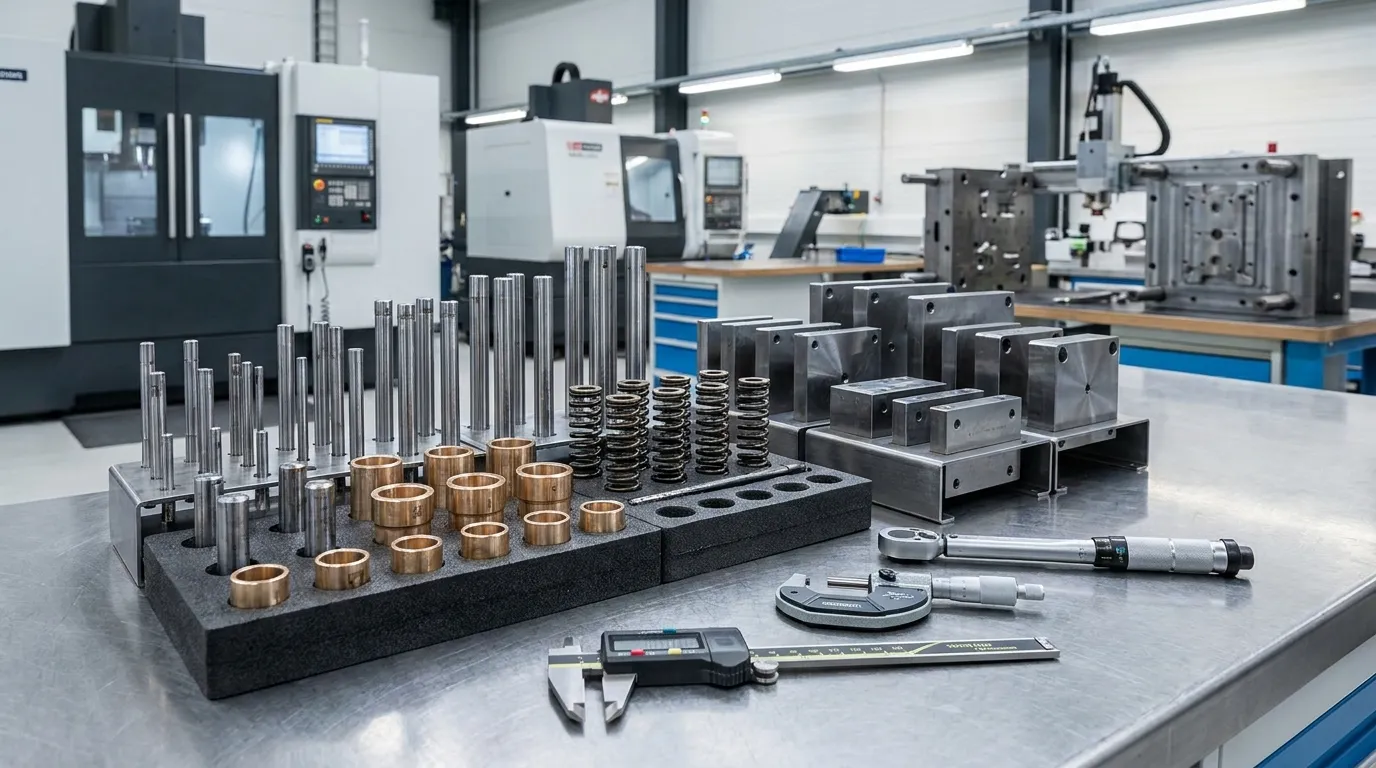
Mold standard parts are pre-engineered mold components produced in fixed sizes and tolerances for repeat use across injection molds and tooling systems. Mereka mengurangi waktu tunggu, mempermudah penggantian, and lower machining costs when catalog specifications meet application requirements.
These components are manufactured according to common dimensional standards, which allows mold makers to source replacements quickly instead of machining every part from scratch. Standardization also improves interchangeability across different mold programs.
Common examples include ejector pins, tiang panduan, bushing, pelat cetakan, lengan, and springs. Many suppliers keep these parts in stock, which helps reduce production delays during mold assembly or maintenance.
Tampilan terperinci tentang struktur cetakan yang lebih luas tersedia di sini Panduan Komponen Cetakan Lengkap.
| Tipe Bagian Standar | Fungsi utama | Manfaat Bersama |
|---|---|---|
| Pin ejektor | Dorong bagian yang dicetak keluar | Penggantian mudah |
| Pos panduan | Sejajarkan bagian cetakan | Pemosisian yang konsisten |
| Bushing | Mengurangi gesekan | Umur pakai lebih lama |
| Mata air | Mendukung gerakan | Perawatan lebih cepat |
| Pelat cetakan | Dukungan struktural | Ukuran standar |
Many manufacturers rely on standardization because it shortens procurement cycles and simplifies servicing. Menurut Suku cadang standar cetakan STRACK, standardized systems also improve compatibility across tooling setups.
Anda juga dapat menjelajahi umum komponen cetakan plastik used across injection mold systems.
Which mold components are usually standardized?
Most mold shops standardize ejector pins, tiang panduan, bushing, mata air, and mold plates because these components benefit from interchangeable sizing, easier replacement, and shorter procurement cycles compared to fully custom-machined parts.
Standardization works best for components that perform repeatable mechanical functions. These parts usually follow established dimensional ranges, which allows suppliers to maintain inventory for fast shipment.
| Komponen | Mengapa Ini Standar | Keuntungan Khas |
|---|---|---|
| Pin ejektor | Frekuensi penggantian tinggi | Perawatan cepat |
| Bushing panduan | Peran perataan tetap | Pertukaran yang lebih baik |
| Mengembalikan pin | Geometri yang dapat diulang | Biaya pemesinan yang lebih rendah |
| Mata air | Rentang beban yang dapat diprediksi | Sumber mudah |
| Basis cetakan | Tata letak struktural umum | Perakitan cetakan lebih cepat |
Some mold shops also standardize cooling fittings, pilar-pilar penyangga, and wear plates to simplify spare-part inventory across multiple production lines.
This approach becomes especially useful in high-volume manufacturing environments. An automotive supplier running several similar molds can keep one shared stock of replacement ejector pins instead of maintaining custom inventory for every tool.
For a broader breakdown of injection mold structures, Panduan komponen cetakan injeksi Rapiddirect explains how these systems work together inside production molds.
If you need tighter specifications or specialty machining, ini Komponen cetakan standar show where precision manufacturing becomes important.
What standard sizes are commonly available?
Standard mold parts are available in a wide range of catalog sizes, but they still follow fixed dimensional systems. Buyers need to confirm diameter, panjang, tolerance class, and regional compatibility before ordering replacements.
Pin ejektor, misalnya, are commonly available in millimeter increments with standardized head dimensions. Guide posts and bushings usually follow established outer diameter and fitment ranges to maintain compatibility between mold halves.
Bagaimana kelas toleransi memengaruhi pertukaran
Tolerance class matters as much as physical size. Two guide bushings with the same diameter may still perform differently if clearance tolerances vary between suppliers or regions.
Before ordering standard parts, buyers should verify:
- Kisaran diameter
- Kenaikan panjang
- Kekerasan permukaan
- Perlakuan panas
- Toleransi kesesuaian
- Sistem standar regional
A common mistake is assuming all catalog components are fully interchangeable. That’s not always true. Some suppliers use proprietary sizing variations, especially for older tooling systems.
Medical and electronics molds often require tighter dimensional control than standard stock tolerances allow. In those situations, standard sizing may still work, but the finishing process usually needs additional machining or inspection.
If your tooling program depends on close alignment tolerances, ini toleransi cetakan presisi explain where tighter specifications become necessary.
When are standard mold parts the better choice?
Standard mold parts are usually the better choice when production speed, replacement availability, and predictable maintenance matter more than ultra-specific geometry or extreme tolerance requirements. They reduce downtime and simplify sourcing across multiple mold programs.
Most general-purpose molds perform well with stocked components. Standardization lowers machining cost, shortens lead time, and makes future replacements easier to manage.
A supplier producing consumer packaging molds, misalnya, may prioritize quick maintenance over custom engineering. In that situation, standardized ejector systems often provide the best balance between cost and reliability.
| If Your Priority Is... | Suku Cadang Standar Biasanya Bekerja Paling Baik |
|---|---|
| Penggantian cepat | Iya |
| Biaya di muka yang lebih rendah | Iya |
| Inventaris cadangan bersama | Iya |
| Cetakan serba guna | Iya |
| Produksi pendek | Iya |
Standard parts are not automatically the cheaper choice long-term. In high-cycle molds, repeated replacement downtime can cost more than a properly engineered custom component.
Tetap saja, many buyers over-specify custom machining when stocked parts already meet production requirements. If the mold does not require extreme wear resistance or complex geometry, standardization usually keeps operations simpler.
Tim yang mengelola pemeliharaan berkelanjutan sering kali mengandalkan suku cadang cetakan pengganti to reduce downtime and avoid long machining queues.
When should you customize mold components instead?
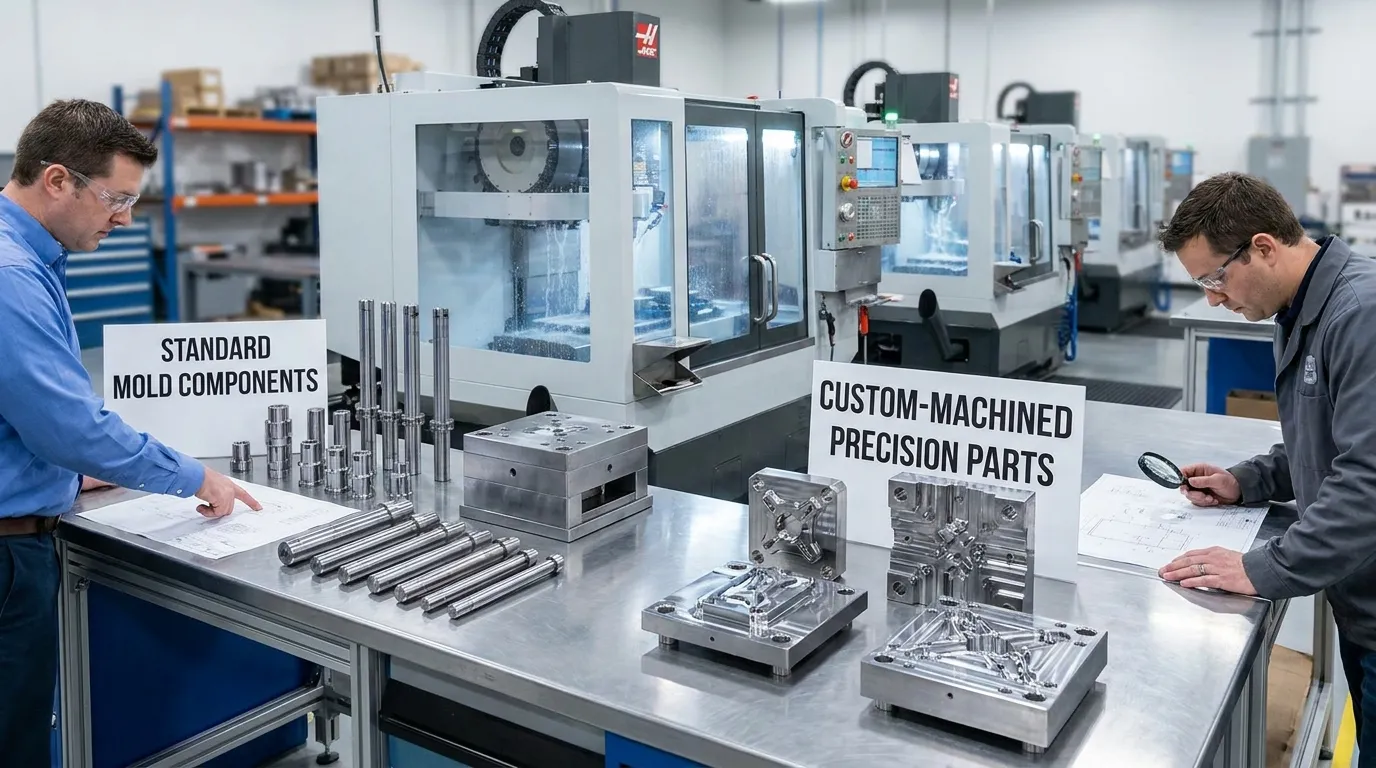
Custom mold components become necessary when standard catalog parts cannot meet tolerance, ketahanan aus, geometri, or cycle-life requirements. High-volume molds and complex part geometries often justify custom machining despite higher upfront costs.
Standard parts work well in many molds, but they have limits. Once a tooling project reaches extreme production volumes or tighter dimensional requirements, customization often becomes the safer option.
Cetakan siklus tinggi
High-cycle molds experience constant wear, gesekan, and repeated impact. Standard components may wear out too quickly under these conditions.
A high-volume automotive mold producing millions of cycles each year may need hardened custom bushings or specialty coatings to reduce maintenance intervals. Although the initial cost is higher, the mold spends less time offline for repairs.
Aplikasi ruang sempit
Some mold layouts simply cannot accommodate catalog dimensions. Electronics housings and compact medical parts often require non-standard geometry to fit within limited tooling space.
One medical mold supplier switched from standard bushings to custom-machined alignment components after tolerance variation caused positioning issues during assembly. The change increased upfront tooling cost but reduced rejected parts and maintenance adjustments.
| Pemicu Kustomisasi | Mengapa Suku Cadang Standar Gagal |
|---|---|
| Toleransi ketat | Kelebihan gerakan atau variasi |
| Lingkungan keausan tinggi | Masa pakai yang lebih pendek |
| Batasan ruang | Dimensi katalog tetap |
| Bahan khusus | Batasan baja standar |
| Geometri unik | Masalah kompatibilitas |
Fast delivery claims matter less if suppliers cannot maintain replacement inventory. Reliable stocking is often more valuable than saving a few days on initial machining.
For projects requiring specialty machining, ini Komponen presisi khusus show where custom manufacturing supports tighter production requirements.
How do lead time and customs delays affect mold part decisions?
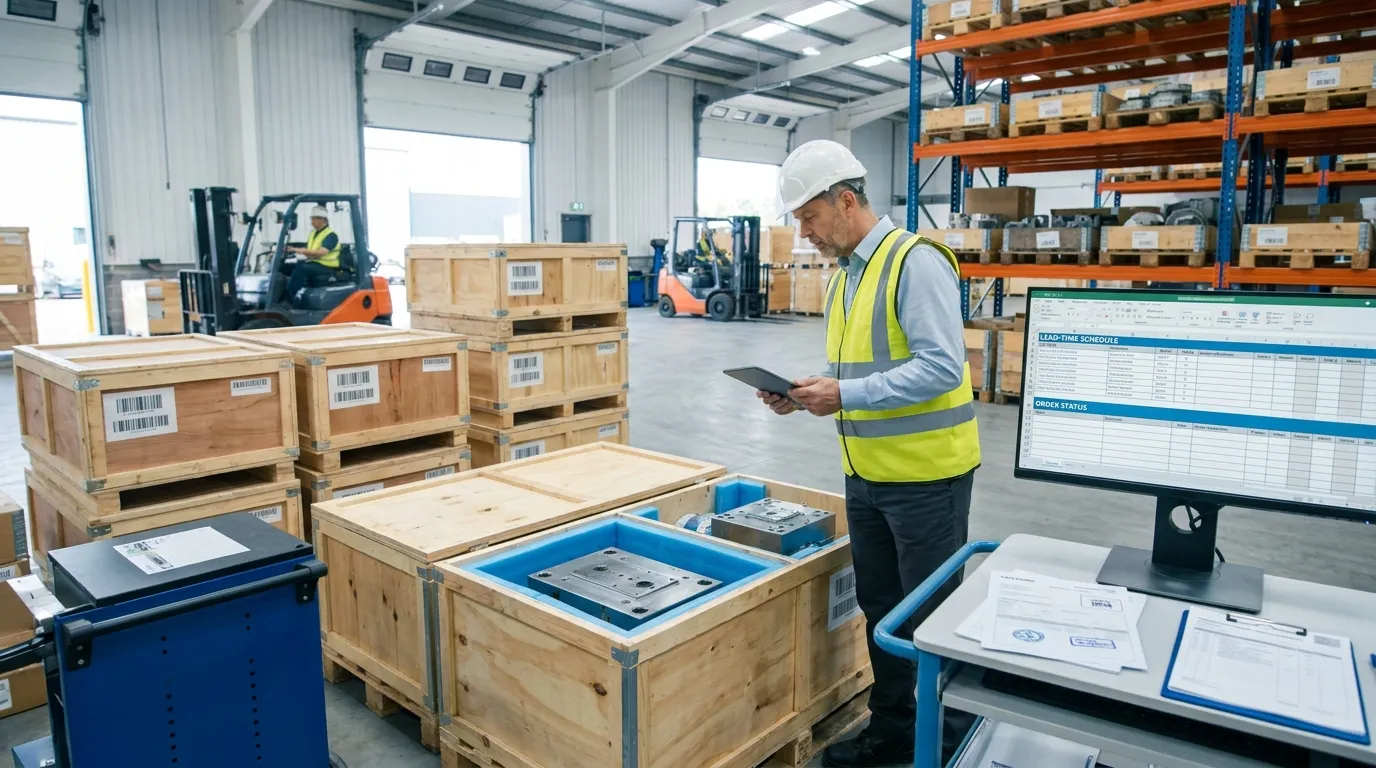
Standard parts usually shorten procurement timelines because suppliers maintain inventory, but imported mold components can still face customs or logistics delays. Critical molds often require backup sourcing or local stocking strategies to reduce production risk.
Lead time is one of the biggest reasons manufacturers choose standard mold parts. A stocked ejector pin may ship in days, while a custom-machined replacement can take several weeks.
That difference becomes important during unexpected downtime. If a production line stops because of a failed guide bushing, waiting four weeks for machining and shipping can cost far more than the part itself.
Cara pembeli mengurangi risiko pengiriman
- Simpan inventaris cadangan penting secara lokal
- Pra-persetujuan pemasok sekunder
- Verifikasi dokumentasi impor lebih awal
- Stok komponen pengganti keausan tinggi
- Hindari dependensi sumber tunggal
Customs delays also create problems for imported tooling components. Menurut Laporan keterlambatan bea cukai NG Terminal, incomplete documentation and compliance checks continue to slow industrial shipments.
One electronics mold supplier experienced a production delay after imported replacement components were held during customs review because shipment documentation was incomplete. The issue forced temporary production downtime while replacement inventory was sourced locally.
Lead-time planning matters during initial mold manufacturing too. Ikhtisar waktu tunggu cetakan injeksi Evok Poly shows how sourcing delays can affect tooling schedules across multiple production stages.
Produsen yang mengelola pemeliharaan berulang sering kali menyimpan Komponen cetakan yang ditebar available locally to reduce replacement delays.
What is the real cost difference between standard and custom parts?
Custom mold parts cost more upfront, but they can reduce wear, pemeliharaan, and replacement frequency in demanding applications. Standard parts usually win on short-term procurement cost, while custom components may lower long-term operational risk.
Upfront price only tells part of the story. Buyers also need to compare replacement frequency, downtime risk, inventory planning, dan masa pakai.
A low-cost standard component may require frequent replacement in high-cycle production. Seiring waktu, repeated downtime and maintenance labor can exceed the cost of a better-engineered custom part.
| Faktor Biaya | Bagian Standar | Bagian Kustom |
|---|---|---|
| Biaya pemesinan awal | Lebih rendah | Lebih tinggi |
| Kecepatan penggantian | Lebih cepat | Lebih lambat |
| Inventaris cadangan | Lebih mudah | Lebih khusus |
| Ketahanan aus | Sedang | Khusus aplikasi |
| Risiko waktu henti | Lebih tinggi dalam penggunaan ekstrem | Lebih rendah di lingkungan yang menuntut |
Consider a mold running 24-hour automotive production. If a standard wear component fails every six months, each shutdown may involve labor, lost production time, and emergency sourcing. A hardened custom component costing twice as much may still reduce annual operating cost if it lasts significantly longer.
Custom machining is often unnecessary for general-purpose molds. Tetap saja, in high-volume tooling, the cheaper component is not always the cheaper decision.
Perusahaan yang membandingkan perencanaan pemeliharaan jangka panjang sering mengevaluasi Pembuatan Bagian Cetakan Kustom alongside replacement frequency and production downtime.
How should buyers decide between standard and custom mold parts?
The safest selection process starts with function, toleransi, and replacement risk rather than price alone. Standard parts fit most general-purpose molds, while high-cycle or high-precision tooling often justifies custom engineering.
The best decision usually comes from balancing production goals with maintenance realities. Buyers should focus on how the mold will actually perform over time, not just the initial purchase price.
| Pertanyaan | Jika Ya | Jika Tidak |
|---|---|---|
| Is the mold high-cycle? | Pertimbangkan suku cadang aus khusus | Suku cadang standar dapat berfungsi |
| Are tolerances extremely tight? | Gunakan pemesinan khusus presisi | Ukuran standar biasanya cukup |
| Is fast replacement critical? | Mendukung komponen yang disimpan | Waktu tunggu yang lebih lama mungkin dapat diterima |
| Is downtime expensive? | Prioritaskan daya tahan | Opsi berbiaya lebih rendah mungkin cocok |
| Are replacement parts easy to source locally? | Sistem standar bekerja dengan baik | Sumber cadangan mungkin diperlukan |
A buyer managing several consumer packaging molds may prioritize fast maintenance and shared spare inventory. In that situation, standardized systems usually make operations easier.
A medical tooling supplier dealing with tight alignment tolerances may reach the opposite conclusion. The higher upfront machining cost becomes easier to justify when production quality depends on precision stability.
If you need a broader overview of mold engineering decisions, ini Panduan cetakan injeksi plastik explains how component selection fits into larger tooling systems.
Cara Memilih Opsi yang Tepat
Most molds do not need fully custom components. Standardized parts handle many production environments efficiently, especially when maintenance speed and inventory simplicity matter most.
The decision changes when molds operate under heavy wear, toleransi ketat, or costly downtime conditions. Dalam kasus-kasus tersebut, custom engineering can reduce long-term operating risk even if the initial cost is higher.
Before choosing mold standard parts, Tinjau volume produksi Anda, replacement timeline, sourcing flexibility, and tolerance requirements together. A practical selection process usually prevents more problems than chasing the lowest upfront price.
Pertanyaan yang Sering Diajukan
What are standard mold parts?
Standard mold parts are pre-manufactured mold components produced in fixed sizes and tolerances for broad compatibility across tooling systems. They reduce machining time, mempermudah penggantian, and improve sourcing speed for mold manufacturers.
Apa perbedaan antara suku cadang cetakan standar dan kustom?
Standard mold parts follow catalog sizes and specifications, while custom parts are machined for unique geometry, toleransi, or performance requirements. Customization is usually chosen when standard components cannot meet production demands.
Are standard mold components interchangeable?
Many standard mold components are interchangeable when suppliers follow the same dimensional standards and tolerance classes. Buyers should still verify compatibility because regional standards and manufacturer specifications may vary.
Which mold parts wear out the fastest?
Pin ejektor, busing panduan, mata air, and sliding components often wear faster because they experience repeated movement and friction during production cycles. Material quality and lubrication strongly affect service life.
How long do mold component replacements usually take?
Replacement time depends on inventory availability, machining complexity, and shipping conditions. Standard stocked parts can ship within days, while custom-machined components may require weeks of production and validation.
What causes customs delays for mold parts?
Customs delays usually happen because of incomplete documentation, origin verification issues, inspection holds, or changing import compliance requirements. Buyers importing critical mold parts often maintain backup inventory to reduce production risk.
Bagikan:


Ditulis oleh Sunshine
di Sunshine, Kami adalah produsen dan pemasok profesional komponen cetakan presisi, menawarkan berbagai produk untuk aplikasi stamping dan cetakan injeksi. Fokus utama kami adalah mencetak cetakan, pin dan lengan ejector, serta tiang panduan dan bushing. Dengan pemesinan CNC canggih, kontrol kualitas ketat, dan kemampuan produksi yang kuat, kami memastikan keandalan, suku cadang presisi tinggi, bersama dengan komponen standar yang tersedia untuk pasokan global yang cepat dan efisien.
BERITA
DAPATKAN LAYANAN
Dengan suku cadang berkualitas untuk memenuhi setiap anggaran dan staf ramah yang terlatih untuk membuat kunjungan Anda menjadi informatif dan tanpa repot.
