



Layanan Injection Molding: Apa yang Pembeli Dapatkan dari Tooling hingga Produksi
Injection molding service providers usually handle far more than mold manufacturing. A complete injection molding service includes DFM review, perkakas, pengambilan sampel, production, kontrol kualitas, perakitan, kemasan, and logistics coordination. Buyers should evaluate suppliers based on engineering support, komunikasi, stabilitas produksi, and long-term manufacturing capability instead of focusing only on tooling price or lead time.
A lot can go wrong between approving a CAD file and receiving finished plastic parts. Delays, revisi alat, communication gaps, and unstable production often cost more than the mold itself. That’s why buyers need to understand what a full-service injection molding partner actually does. The right supplier helps manage the entire workflow, from design review through mass production support.
What does an injection molding service include?
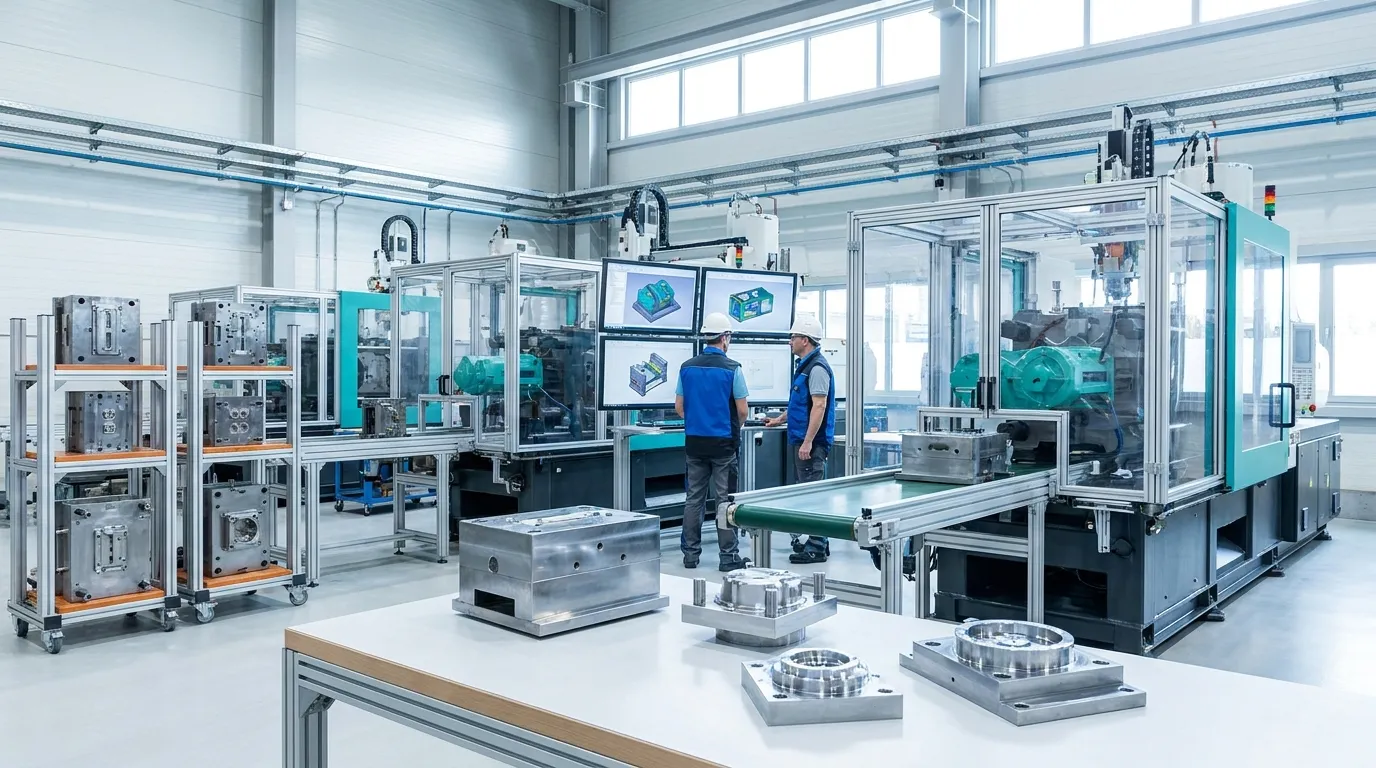
An injection molding service usually covers design review, pembuatan cetakan, pengambilan sampel, production, kontrol kualitas, and logistics support. Strong suppliers manage the full workflow instead of handing buyers off between separate vendors.
Some suppliers only build molds. Others manage the complete manufacturing process from engineering review to final shipment. For most buyers, the second option reduces coordination problems and keeps production more stable.
A typical service starts with DFM analysis, which stands for Design for Manufacturability. Engineers review part geometry, ketebalan dinding, sudut-sudut draft, toleransi, and resin selection before tooling begins. This stage helps prevent expensive mold corrections later.
After design approval, the supplier moves into tooling, pengambilan sampel, production, and post-processing support. Many companies also offer assembly, kemasan, pelabelan, and export coordination.
A complete injection molding service often includes:
- Ulasan DFM dan CAD
- Dukungan pemilihan bahan
- Pembuatan cetakan
- Validasi sampel T1
- Cetakan produksi
- Pemeriksaan kualitas
- Perakitan dan pengemasan
- Koordinasi pengiriman
Pembeli yang mencari dukungan produksi terintegrasi dapat mengulas ini Solusi pencetakan khusus to understand how full-service projects are typically managed.
What happens before mold manufacturing starts?
Before steel is cut, suppliers review part geometry, toleransi, seleksi resin, dan tujuan produksi. This DFM stage reduces tooling risk, avoids expensive revisions, and improves long-term production stability.
The pre-production phase is where many successful projects are decided. A supplier should review your CAD files carefully before approving tooling. Small design issues can create major molding problems later if they are missed early.
Good suppliers check for uneven wall thickness, sudut-sudut tajam, bekas tenggelam, memotong, and poor gate locations. They also review expected production volume because prototype tooling and mass production tooling are built differently.
Lowest tooling cost is not always the safest option. Cheap molds may work for short production runs, but unstable tooling can create quality issues and expensive downtime later.
Informasi apa yang harus disiapkan pembeli sebelum meminta penawaran
Before requesting pricing, buyers should prepare:
- File CAD 3D
- Persyaratan bahan
- Volume produksi tahunan
- Ekspektasi hasil akhir permukaan
- Persyaratan toleransi
- Detail kemasan
Providing complete information reduces quoting delays and tooling revisions. Buyers preparing an Kutipan cetakan injeksi should also clarify whether parts need assembly or secondary operations.
For readers who want deeper technical background, ini Dasar-dasar desain cetakan explain how mold structure decisions affect manufacturability.
How long does an injection molding project usually take?
Most injection molding projects take several weeks to several months depending on tooling complexity, revisi, persyaratan validasi, and production scale. Tool manufacturing is usually the longest stage in the process.
Simple prototype molds may be completed relatively quickly, while hardened steel production molds can take much longer. Menurut Wawasan waktu tunggu Aprios dan Panduan waktu tunggu EvokPoly, tooling complexity and revisions heavily affect timelines.
Garis Waktu Proyek Cetakan Injeksi
| Panggung | Fokus Khas | Risiko Penundaan Umum |
|---|---|---|
| Ulasan DFM | Validasi desain | Detail CAD hilang |
| Pembuatan alat | Pemesinan cetakan | Revisi baja |
| Pengambilan sampel T1 | Validasi bagian | Masalah dimensi |
| Koreksi cetakan | Penyesuaian alat | Beberapa revisi |
| Produksi massal | Output stabil | Kekurangan material |
| Pengiriman | Logistik ekspor | Penundaan bea cukai |
Fast quoting does not automatically mean strong engineering support. Some suppliers respond quickly but skip detailed DFM checks. That often creates bigger delays after tooling starts.
Alasan umum garis waktu cetakan injeksi tergelincir
Production schedules usually change because of one of these problems:
- Perubahan desain setelah persetujuan perkakas
- Masalah ketersediaan material
- Gambar teknis yang tidak lengkap
- Siklus koreksi cetakan
- Penundaan ekspor dan bea cukai
One automotive supplier delayed launch production after changing clip geometry once the mold steel had already been cut. The tooling revision added weeks to the project timeline and increased validation costs.
What happens during sampling and validation?
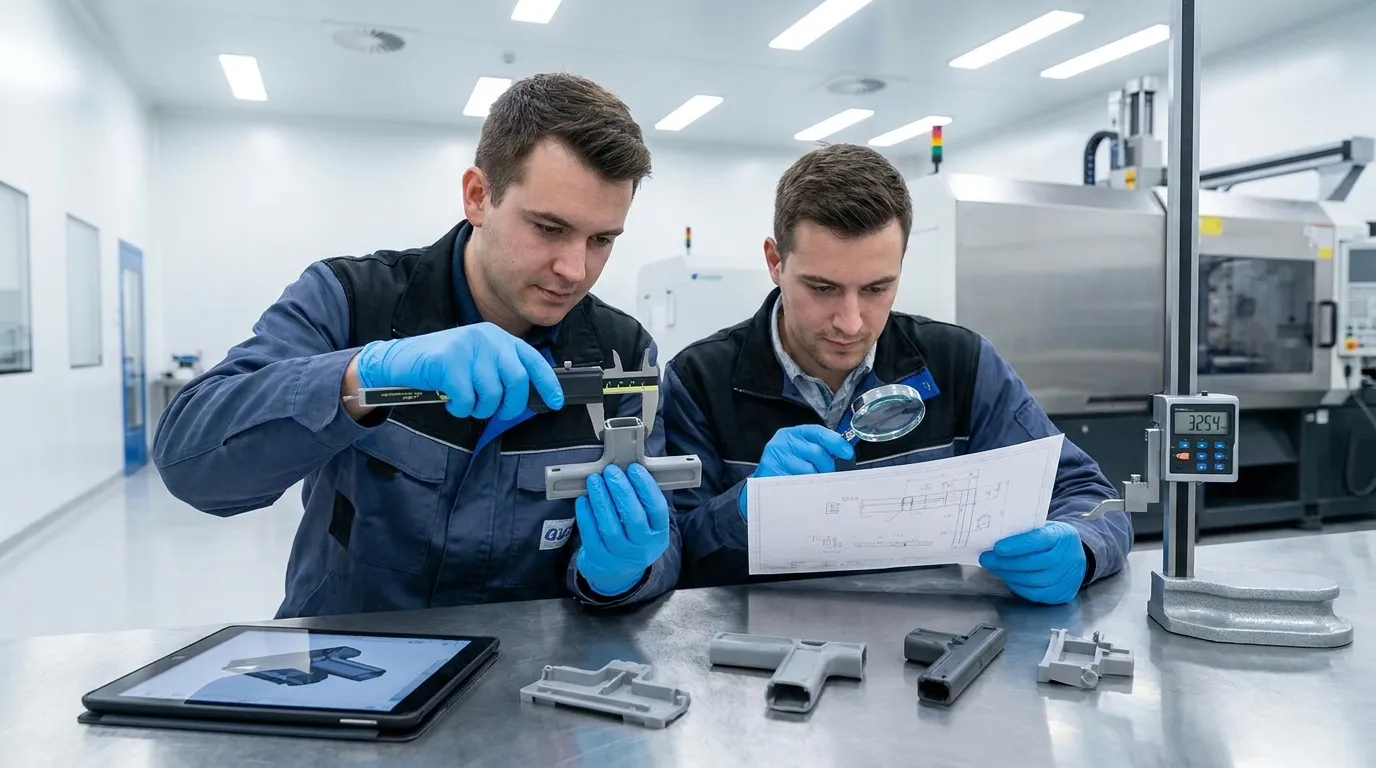
Sampling validates whether the mold can consistently produce parts within specification. Buyers review dimensions, finishing permukaan, cocok, and function before approving the tool for mass production.
T1 sampling is the first trial run from a newly built mold. This stage checks whether the mold performs correctly under real production conditions. Suppliers inspect molded parts and compare them against engineering requirements.
Most buyers review dimensional reports, penampilan kosmetik, pemasangan perakitan, and functional testing during this phase. If problems appear, the mold goes back for corrections before another sampling round begins.
Apa yang harus ditinjau pembeli selama persetujuan T1
During validation, pembeli harus mengonfirmasi:
- Dimensi kritis
- Kualitas permukaan
- Lengkungan atau tanda tenggelam
- Perakitan cocok
- Kinerja resin
- Konsistensi siklus
A medical device startup, misalnya, may approve dimensions during T1 sampling but delay production release until packaging validation and labeling requirements are fully verified.
Perusahaan yang mengevaluasi kualitas perkakas juga dapat meninjau bagaimana seorang produsen cetakan plastik handles sampling corrections and mold optimization.
What production support should buyers expect after tooling approval?
Reliable injection molding services continue after tooling approval with process monitoring, quality inspections, assembly support, packaging coordination, and production scheduling to maintain stable output.
Production support matters just as much as tooling quality. Once a mold enters mass production, suppliers must maintain consistent process control to reduce scrap, variasi dimensi, and downtime.
Good manufacturers track molding temperatures, pressure settings, cycle times, and inspection data during production. Many suppliers also handle secondary operations such as ultrasonic welding, perakitan, pad printing, pelabelan, and retail packaging.
A consumer electronics company may choose one supplier for molding and assembly to avoid communication delays between separate vendors. Integrated production support often reduces scheduling conflicts and shipping errors.
Pembeli yang membandingkan pemasok harus mengevaluasi apakah perusahaan beroperasi sebagai produsen cetakan injeksi plastik with long-term production capabilities or only as a tooling vendor.
Pembaca yang mencari contoh produksi khusus industri dapat menjelajahi Aplikasi cetakan injeksi for broader manufacturing use cases.
What causes injection molding delays and production problems?
Injection molding delays usually come from late design changes, revisi alat, shipping issues, or unclear specifications. Early engineering review and consistent communication reduce most avoidable delays.
Most production problems start long before the molding machine runs. Poor communication during design review often creates tooling changes, produksi tidak stabil, or inspection failures later.
Risiko dan Respons Penundaan Umum
| Jika ini terjadi | Dampak produksi | Respons yang lebih baik |
|---|---|---|
| File CAD tidak lengkap | Revisi alat | Selesaikan gambar lebih awal |
| Resin berubah terlambat | Penundaan pengambilan sampel | Mengunci bahan sebelum perkakas |
| Perubahan kemasan terlambat | Gangguan pengiriman | Konfirmasi spesifikasi kemasan lebih awal |
| Dokumen bea cukai hilang | Penundaan ekspor | Siapkan dokumen kepatuhan terlebih dahulu |
| Koreksi alat berulang | Perluasan garis waktu | Tingkatkan ulasan DFM |
Menurut Pelaporan keterlambatan bea cukai TBS, customs processing disruptions can affect export timelines and manufacturing schedules. Overseas buyers should factor shipping risk into production planning.
A supplier that only builds molds may create coordination problems later if production and assembly are handled elsewhere. Buyers managing multiple vendors often spend more time solving communication issues during production ramp-up.
How should buyers evaluate an injection molding supplier?
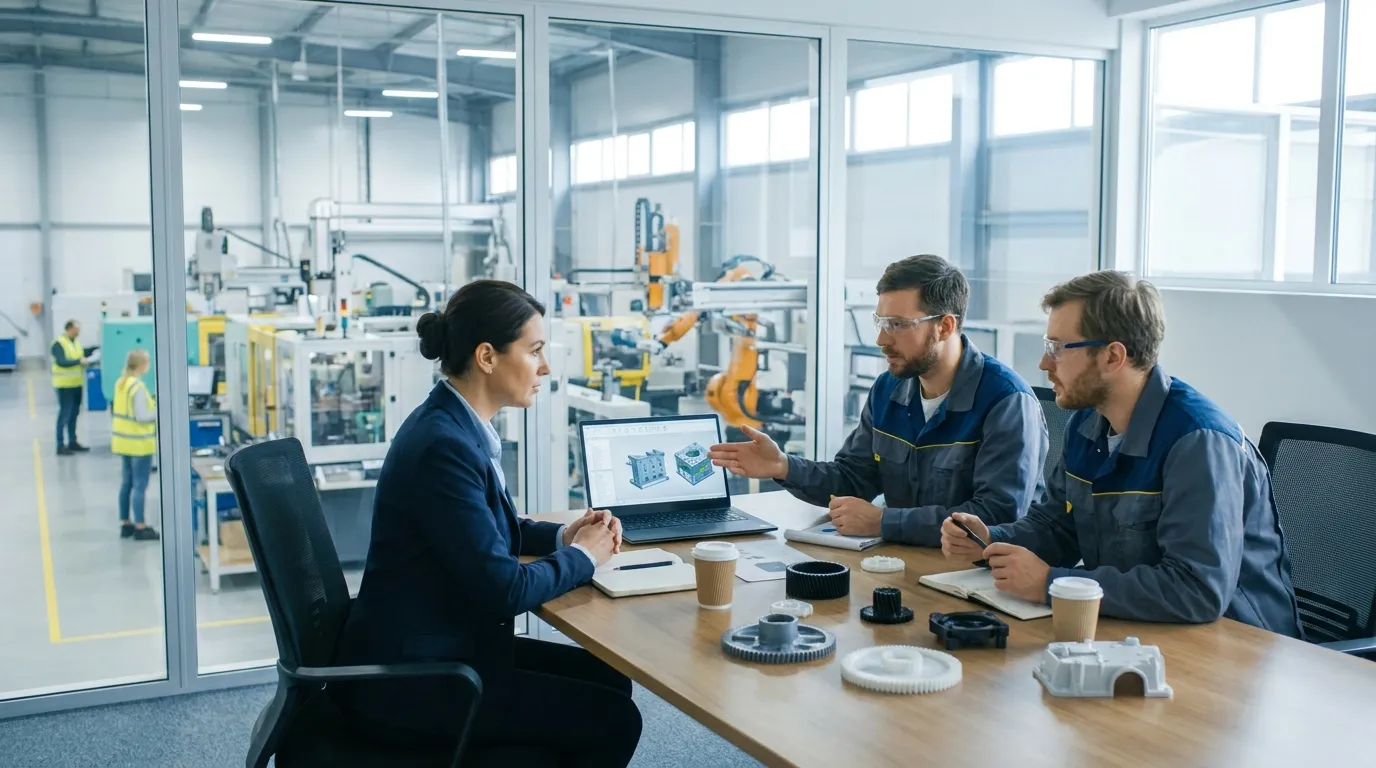
Buyers should evaluate injection molding suppliers based on engineering support, pengalaman pembuatan alat, sistem kualitas, kecepatan komunikasi, production scalability, and long-term manufacturing reliability rather than tooling price alone.
Choosing a supplier based only on tooling cost is risky. A lower quote may leave out engineering support, process validation, inspection reporting, or production planning. Those gaps usually appear later when delays and quality issues become expensive.
Strong suppliers explain their process clearly and communicate project status consistently. They should also show experience with your product category, volume produksi, and export requirements.
Daftar Periksa Evaluasi Pemasok
| Area Evaluasi | Apa yang Harus Dicari Pembeli |
|---|---|
| Dukungan teknik | Umpan balik DFM terperinci |
| Kemampuan perkakas | Pengalaman dengan cetakan serupa |
| Sistem mutu | Inspeksi dan pelacakan proses |
| Komunikasi | Hampir, clear updates |
| Kapasitas produksi | Output manufaktur yang stabil |
| Pengalaman ekspor | Dukungan pengemasan dan logistik |
Pertanyaan yang harus ditanyakan pembeli sebelum menyetujui pemasok
- How are tooling revisions handled?
- What inspections are included?
- How is production monitored?
- Can assembly and packaging be managed internally?
- What happens if dimensions fail during T1 sampling?
Menurut Pertanyaan sumber Rodon Group, supplier evaluation should include engineering support, sistem kualitas, and production experience, not just pricing.
Perusahaan yang mencari jangka panjang Mitra Cetakan Injeksi Kustom should also evaluate responsiveness during the quoting stage. Communication quality early in the project usually reflects how production support will work later.
When should a buyer request an injection molding quotation?
A buyer should request a quotation once the part design, material direction, and production goals are reasonably defined. Waiting for every small detail can slow the project, but incomplete information also creates inaccurate quotes and revision delays.
The best time to request pricing is after CAD files are ready and the buyer understands expected production volume. Suppliers can then estimate tooling type, hitungan rongga, material usage, and production planning more accurately.
Before requesting a quote, menyiapkan:
- File CAD 3D
- Preferensi resin
- Perkiraan volume tahunan
- Persyaratan finishing permukaan
- Harapan perakitan
- Detail kemasan
One buyer reduced tooling revisions by submitting finalized resin specifications and assembly requirements during the quotation stage. That helped the supplier complete DFM analysis earlier and shorten the approval cycle.
If you're preparing for supplier discussions, panduan ini untuk Minta Penawaran Cetakan can help organize the technical information manufacturers typically need.
Mendapatkan Langkah Selanjutnya dengan Benar
A strong injection molding service should support far more than tooling alone. Buyers need clear engineering review, stable production planning, kontrol kualitas, and responsive communication throughout the project lifecycle.
Before choosing a supplier, review how they handle DFM, pengambilan sampel, production monitoring, and post-molding support. The cheapest mold quote is not always the safest production decision. A reliable manufacturing partner helps reduce delays, meningkatkan konsistensi, and keep projects moving from tooling approval through final delivery.
Pertanyaan yang Sering Diajukan
How long does injection molding tooling usually last?
Injection mold lifespan depends on tooling material, tipe resin, pemeliharaan, dan volume produksi. Production molds can last from hundreds of thousands to more than one million cycles when properly maintained.
What causes injection molding defects during production?
Common injection molding defects come from poor venting, incorrect temperatures, material flow restrictions, atau pengaturan proses yang tidak stabil. Strong suppliers monitor process consistency to reduce scrap and production interruptions.
What information do suppliers need for an injection molding quote?
Most suppliers need CAD drawings, persyaratan material, estimated annual volume, harapan toleransi, dan persyaratan finishing permukaan. Clear project information improves quote accuracy and reduces revision delays.
What is T1 sampling in injection molding?
T1 sampling is the first trial run from a newly built mold. Buyers review dimensions, penampilan, and functionality before approving mold corrections or production release.
Can one supplier handle tooling and mass production?
Iya. Many injection molding companies provide complete services including tooling, pencetakan, perakitan, kemasan, and logistics support. Buyers often prefer integrated suppliers to reduce communication gaps and project delays.
Why do injection molding projects get delayed?
Injection molding projects are commonly delayed by tooling revisions, late design changes, kekurangan material, or customs issues during international shipping. Early DFM review helps reduce many avoidable delays.
Bagikan:


Ditulis oleh Sunshine
di Sunshine, Kami adalah produsen dan pemasok profesional komponen cetakan presisi, menawarkan berbagai produk untuk aplikasi stamping dan cetakan injeksi. Fokus utama kami adalah mencetak cetakan, pin dan lengan ejector, serta tiang panduan dan bushing. Dengan pemesinan CNC canggih, kontrol kualitas ketat, dan kemampuan produksi yang kuat, kami memastikan keandalan, suku cadang presisi tinggi, bersama dengan komponen standar yang tersedia untuk pasokan global yang cepat dan efisien.
BERITA
DAPATKAN LAYANAN
Dengan suku cadang berkualitas untuk memenuhi setiap anggaran dan staf ramah yang terlatih untuk membuat kunjungan Anda menjadi informatif dan tanpa repot.
