



Ejector Sleeves: When to Use Them Instead of Ejector Pins
Ejector sleeves are used in injection molds when parts eject around a core pin, deep boss, or cylindrical feature where standard ejector pins cannot distribute force evenly. They improve concentric ejection, reduce cosmetic defects, and protect hollow or thin-wall features. Correct sleeve fit, pembersihan, and concentricity are critical because poor alignment increases wear, menempel, and part damage during ejection.
Parts with deep bosses or tall cylindrical cores often fail when standard ejector pins apply uneven force during ejection. That problem gets worse in cosmetic molds where stress marks or cracking can ruin the finished part. Ejector sleeves solve this by distributing force around the feature instead of pushing from one small point. The challenge is knowing when sleeves are necessary, how tight the fit should be, and what specifications matter before production starts.
What does an ejector sleeve do in injection molding?
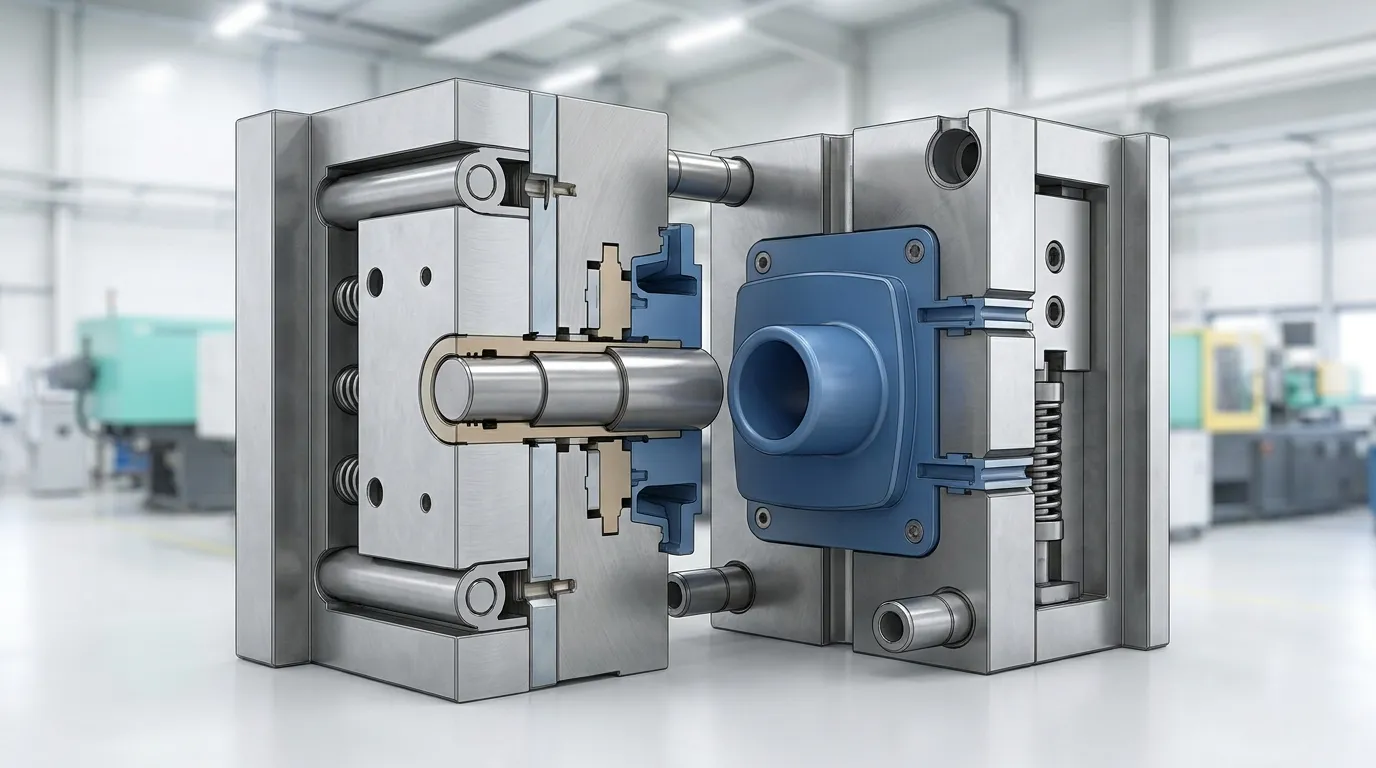
Ejector sleeves are tubular ejectors designed to push molded parts off core pins or cylindrical features evenly. They reduce stress concentration compared to standard ejector pins and help prevent deformation around bosses or hollow sections.
An ejector sleeve works like a hollow ejector pin. Instead of pushing from a single contact point, the sleeve surrounds the core pin and applies force evenly around the molded feature. This helps the part release without tilting, retak, or sticking during ejection.
Sleeves are commonly used for cylindrical geometries such as bosses, hubs, dan bagian berongga. These shapes often trap tightly around the core pin after cooling. A standard pin can create localized stress in one area, especially on thin-wall plastic parts.
Menurut Paten manufaktur US5730812A, ejector sleeves are produced with strict concentricity control so the sleeve moves smoothly around the core pin during repeated molding cycles.
For readers who want a broader overview of mold components, Sinar Matahari Pro Panduan Komponen Cetakan Lengkap explains how ejector systems fit into the full mold assembly.
Anda juga dapat meninjau ini Dasar-dasar pin ejektor to compare solid pins with sleeve-style ejectors.
When should you use an ejector sleeve instead of an ejector pin?
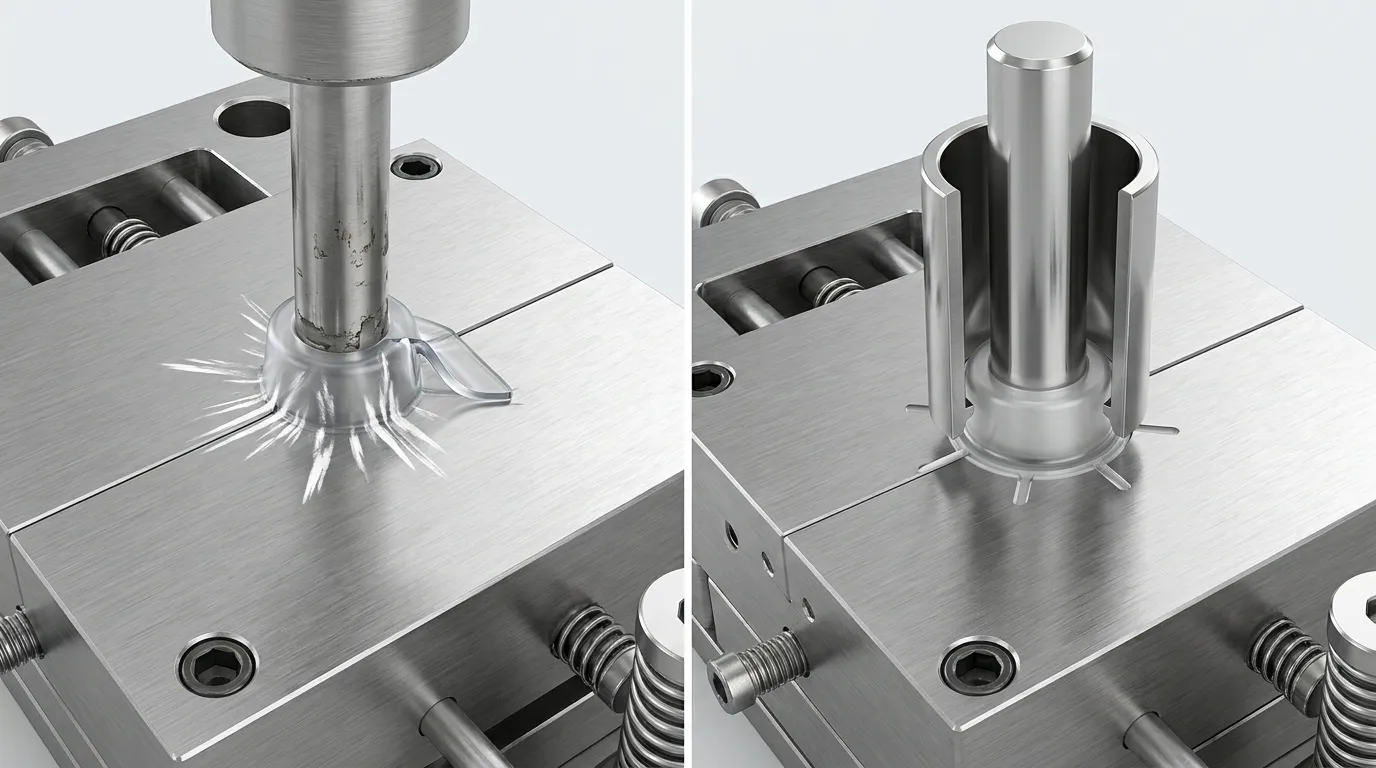
Use ejector sleeves when parts eject around a core pin, deep boss, or cylindrical feature where a standard ejector pin would create uneven force or visible stress marks. Sleeves distribute pressure more evenly and improve concentric ejection.
Ejector sleeves are usually the safer choice when the molded feature surrounds a core pin. The sleeve keeps the ejection force centered, which reduces side loading and lowers the risk of deformation. This matters most in cosmetic parts, thin-wall parts, and deep cylindrical geometries.
Standard ejector pins are not automatically the simpler or safer option. Around deep bosses or cylindrical cores, they often create uneven force that increases cosmetic defects and sticking risk. A sleeve may cost more upfront, but it can prevent expensive mold adjustments later.
Meja Keputusan Lengan vs Pin
| Geometri Bagian | Opsi yang Direkomendasikan | Risiko jika salah pilih digunakan | Sensitivitas Kosmetik |
|---|---|---|---|
| Bos yang dalam | Selongsong ejektor | Retak bos | Tinggi |
| Silinder berongga | Selongsong ejektor | Uneven release | Tinggi |
| Area struktural datar | Pin ejektor | Risiko minimal | Rendah |
| Fitur yang didukung inti tinggi | Selongsong ejektor | Pemuatan samping | Sedang |
| Dinding non-kosmetik tebal | Pin ejektor | Tanda saksi kecil | Rendah |
A cosmetic electronics housing is a common example. Deep screw bosses inside the housing often show stress whitening when standard pins eject too aggressively from one side. A sleeve spreads the force around the boss and reduces visible defects.
For a broader look at mold ejection layouts, Panduan Sunshine Pro untuk Desain Sistem Ejeksi explains how different ejector components work together inside the mold.
Which molded part geometries typically require ejector sleeves?
Ejector sleeves are commonly used for deep bosses, cylindrical hubs, and hollow molded sections where centered ejection is critical. These geometries often fail with standard pins because force concentrates on a small contact area.
Most sleeve applications involve parts that wrap tightly around a cylindrical core. During cooling, the plastic shrinks around the core pin, which increases friction during ejection. A centered sleeve helps release the part evenly instead of pushing from one edge.
Common examples include bottle caps, medical housings, electronic screw bosses, and precision cylindrical parts. High-cycle cap molds often rely on sleeves because the parts are thin, fleksibel, and sensitive to deformation during release.
Aplikasi Geometri Umum
| Jenis Geometri | Mengapa Lengan Membantu |
|---|---|
| Bos yang dalam | Mencegah retak di sekitar dinding bos |
| Tutup dinding tipis | Mengurangi deformasi selama pelepasan |
| Hub silinder | Mempertahankan ejeksi konsentris |
| Perumahan kosmetik | Mengurangi tanda stres yang terlihat |
| Bagian yang didukung inti tinggi | Mencegah pemuatan samping |
Mengapa selongsong biasa digunakan di sekitar pin inti
Core pins support internal molded features such as holes, bos-bos, and tubes. When the plastic cools, those features grip the core tightly. An ejector sleeve moves around the core pin and applies balanced pressure to the entire feature.
Menurut Teknologi Cetakan ZJ, sleeve ejectors are widely used for cylindrical molding applications because they improve ejection stability around core-supported geometries.
Anda juga dapat meninjau ini komponen ejeksi cetakan to understand where sleeves fit inside larger ejection assemblies.
Why do fit and concentricity matter for ejector sleeves?
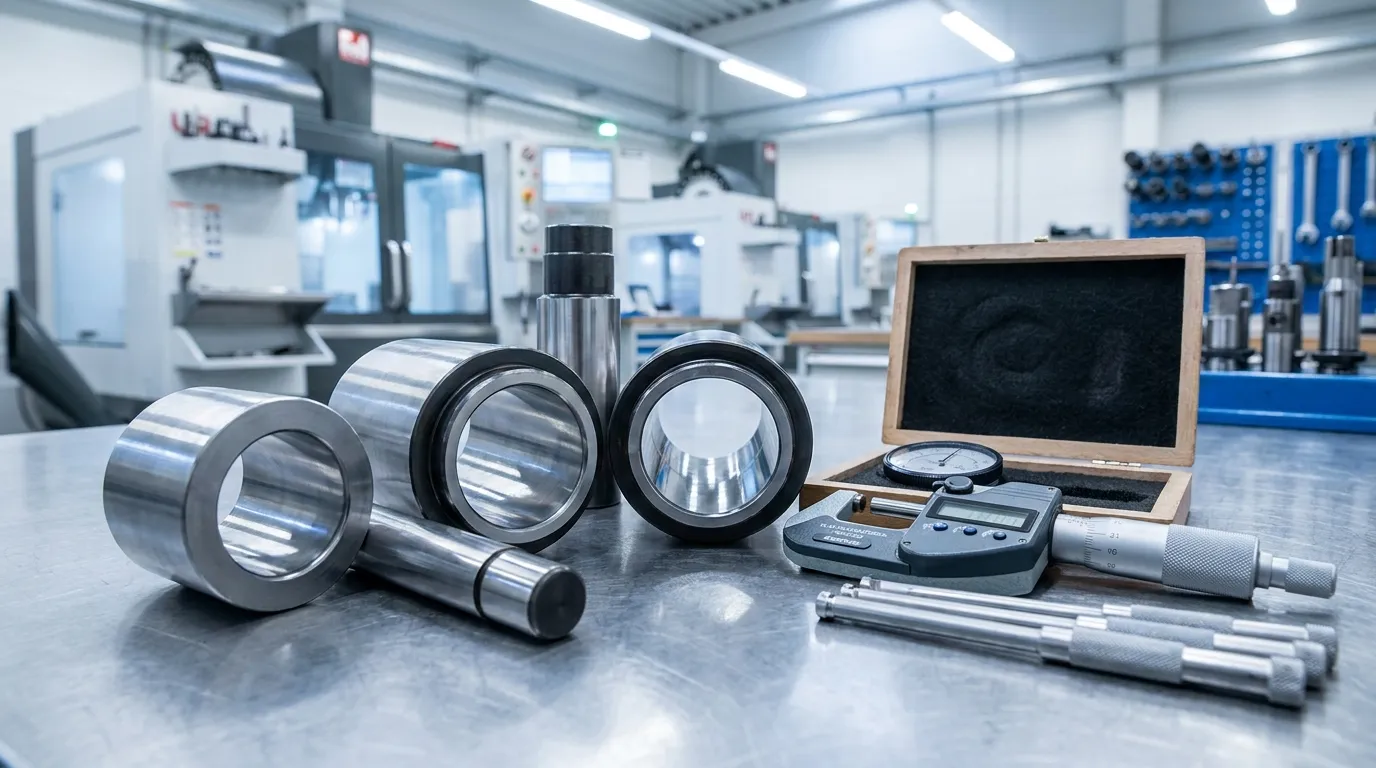
Ejector sleeves require tight concentricity and controlled clearance because misalignment increases friction, memakai, and sticking during ejection. Poor fit can damage both the molded part and the mold core.
Unlike standard ejector pins, sleeves move around another component. That means both the inside diameter and outside diameter must stay aligned during repeated molding cycles. Even small concentricity errors can create uneven contact and friction.
Itu Spesifikasi lengan ejektor cetakan pilihan reference tight TIR values and nitrided surfaces to improve alignment stability and wear resistance. Those tolerances become more important in high-cycle molds.
Overly tight sleeve clearance is not always better. Tight fits improve stability, but aggressive clearance reduction can increase galling and friction if lubrication or alignment is poor. In many production molds, controlled movement is safer than forcing near-zero clearance.
Masalah umum yang disebabkan oleh konsentrisitas yang buruk
| Masalah | Kemungkinan Penyebab |
|---|---|
| Pengikatan lengan | Pin inti yang tidak sejajar |
| Membelokkan | Gesekan yang berlebihan |
| Keausan yang tidak merata | Konsentrisitas yang buruk |
| Bagian menempel | Jarak bebas yang ketat |
| Kerusakan inti | Pemuatan samping selama pelepasan |
A medical molding application is a good example. Medical molds often run high volumes with strict dimensional requirements. Many manufacturers use nitrided sleeves because the harder surface helps reduce wear while maintaining stable movement around the core pin.
What materials and surface treatments are commonly used for ejector sleeves?
Most ejector sleeves use H13 or SKD61 hot-work tool steel because these materials resist wear, thermal fatigue, and repeated ejection stress. Nitrided surfaces further improve hardness and reduce galling.
Injection molds run through repeated heating and cooling cycles, so sleeve materials must resist thermal fatigue and surface wear. H13 and SKD61 are common choices because they hold hardness well under high-temperature production conditions.
Menurut Ikhtisar materi ZGCGMJ, SKD61 provides strong wear resistance and thermal stability for repeated molding cycles. Many suppliers also add nitriding treatments to increase surface hardness without making the sleeve brittle.
Bahan Lengan Ejektor Umum
| Bahan | Manfaat Utama | Penggunaan Khas |
|---|---|---|
| Baja H13 | Tahan panas | Cetakan siklus tinggi |
| SKD61 | Ketahanan aus | Cetakan presisi |
| Baja nitrid | Kekerasan permukaan | Bagian kosmetik |
| Baja perkakas yang dikeraskan | Daya tahan | Produksi umum |
A thin-wall cap mold running continuously at high speed puts heavy wear on sleeve surfaces. In that situation, nitrided sleeves often last longer because the hardened surface reduces friction during repeated ejection cycles.
What failures happen when the wrong ejector method is used?
Using ejector pins where sleeves are required can create uneven ejection force, leading to boss cracking, tanda tegangan, menempel, or deformation. Incorrect sleeve fit can also accelerate mold wear and cause galling.
Most ejection failures start with uneven force distribution. When a pin pushes against one side of a deep boss, the plastic can flex or crack during release. Cosmetic surfaces are especially vulnerable because stress whitening often appears before the part fully ejects.
A mold with poor sleeve concentricity can create another problem. Repeated friction between the sleeve and core pin causes galling, which is surface damage created by metal-to-metal contact. Once galling starts, the sleeve movement becomes rough and sticking gets worse.
Kegagalan Ejeksi Umum
| Kegagalan | Penyebab Khas | Solusi yang Lebih Baik |
|---|---|---|
| Stress whitening | Gaya pin tidak merata | Gunakan ejeksi lengan |
| Retak bos | Pemuatan samping | Gaya lengan terpusat |
| Membelokkan | Izin yang buruk | Pas dan pelumasan yang benar |
| Bagian menempel | Ketidaksejajaran | Meningkatkan konsentrisitas |
| Keausan yang tidak merata | Kontrol toleransi longgar | Ukuran lengan presisi |
Itu Pembuatan CetakanAnalisis teknologi highlights how wear conditions and improper operating alignment contribute to ejector sleeve failure over time.
Anda juga dapat meninjau ini Masalah umum pin ejektor to understand how poor ejection choices affect overall mold performance.
How do you specify ejector sleeves correctly for a mold build?
Correct ejector sleeve specification depends on core-pin diameter, required clearance, stroke length, kekerasan, and concentricity tolerance. Inaccurate sizing increases wear risk and can create unstable ejection.
The first step is matching the sleeve ID to the core pin diameter with the correct running clearance. The sleeve must move freely without excessive looseness. Stroke length also matters because the sleeve needs enough travel to release the molded feature completely.
Standard catalog sleeves work for many molds, but complex cosmetic parts often require custom dimensions or tighter concentricity controls than off-the-shelf components provide. Buyers sometimes underestimate how much part geometry affects sleeve specification.
Daftar Periksa Spesifikasi Lengan Ejektor
| Item Spesifikasi | Mengapa Itu Penting |
|---|---|
| Diameter pin inti | Menentukan ID lengan |
| Lengan OD | Cocok dengan tata letak pelat ejektor |
| Jarak bebas sesuai | Mengontrol stabilitas gerakan |
| Panjang stroke | Memastikan ejeksi penuh |
| Kelas bahan | Memengaruhi masa pakai |
| Kekerasan | Meningkatkan daya tahan |
| Perawatan permukaan | Mengurangi kemarahan |
| Toleransi konsentrisitas | Mencegah pengikatan |
Ketika selongsong ejektor khusus diperlukan
Custom sleeves are often required for unusual boss geometries, cosmetic molds, or precision medical parts. A standard sleeve may fit dimensionally but still fail if the tolerance stack creates unstable movement around the core.
A procurement comparison shows this clearly. A standard MISUMI sleeve may work for a common bottle-cap mold, but a custom-machined sleeve is often safer for a nonstandard electronics housing with tight cosmetic requirements.
For more detail on precision component sizing, Panduan Sunshine Pro untuk Toleransi perkakas presisi explains how tolerance control affects tooling performance.
Are standard ejector sleeves enough for most molds?
Standard ejector sleeves handle many production molds successfully, especially for common cylindrical geometries with moderate cosmetic requirements. They are easier to source, less expensive, and available in common dimensions from major suppliers.
Custom sleeves become more important when molds require unusual diameters, tighter concentricity, or higher cosmetic standards. Medical molds, thin-wall packaging, and precision electronics often need tighter control than standard catalog parts provide.
Lengan Standar vs Kustom
| Faktor | Lengan Standar | Lengan Kustom |
|---|---|---|
| Waktu tunggu | Pendek | Lebih lama |
| Biaya | Lebih rendah | Lebih tinggi |
| Ukuran yang tersedia | Terbatas | Fleksibel |
| Kontrol konsentrisitas | Kelas standar | Khusus aplikasi |
| Kinerja kosmetik | Sedang | Presisi lebih tinggi |
If the mold uses basic cylindrical features and standard production speeds, catalog sleeves are usually enough. For high-cycle or cosmetic molds, tighter engineering control often pays for itself through lower defect rates and reduced maintenance.
Cara Memilih Opsi yang Tepat
Choosing between ejector sleeves and standard pins comes down to geometry, force distribution, and tolerance control. Bos yang dalam, cylindrical cores, and cosmetic surfaces usually benefit from sleeve ejection because the force stays centered during release.
Before finalizing a mold design, review the core-pin diameter, clearance fit, volume produksi yang diharapkan, dan persyaratan kosmetik. Those details affect wear life more than the component price alone. When ejector sleeves are specified correctly, they reduce sticking, meningkatkan kualitas bagian, and help stabilize long production runs.
Pertanyaan yang Sering Diajukan
What is the primary function of an ejector sleeve?
An ejector sleeve pushes molded parts evenly around a core pin or cylindrical feature during mold ejection. It spreads force over a larger contact area than a standard ejector pin, which helps reduce stress marks and deformation.
When should ejector sleeves be used instead of ejector pins?
Ejector sleeves should be used for deep bosses, hollow cylinders, and core-pin-supported features that require centered ejection. Standard ejector pins can apply uneven pressure and increase the risk of cracking or visible stress marks.
Why are ejector sleeves used around core pins?
Ejector sleeves surround the core pin so the ejection force stays balanced around the molded feature. This reduces side loading, improves release stability, and helps prevent sticking during production.
What materials are commonly used for ejector sleeves?
H13 and SKD61 hot-work tool steels are common ejector sleeve materials because they resist wear and thermal fatigue. Many manufacturers also use nitrided surfaces to improve hardness and reduce galling.
What causes ejector sleeve failure?
Konsentrisitas yang buruk, incorrect clearance, pelumasan yang tidak memadai, and side loading are common causes of ejector sleeve failure. These conditions increase friction and wear, which can lead to binding and unstable ejection.
Do ejector sleeves require tight tolerances?
Iya, ejector sleeves require controlled clearance and tight concentricity so they move smoothly around the core pin. Loose or misaligned sleeves increase wear and can damage both the mold and molded part.
Bagikan:


Ditulis oleh Sunshine
di Sunshine, Kami adalah produsen dan pemasok profesional komponen cetakan presisi, menawarkan berbagai produk untuk aplikasi stamping dan cetakan injeksi. Fokus utama kami adalah mencetak cetakan, pin dan lengan ejector, serta tiang panduan dan bushing. Dengan pemesinan CNC canggih, kontrol kualitas ketat, dan kemampuan produksi yang kuat, kami memastikan keandalan, suku cadang presisi tinggi, bersama dengan komponen standar yang tersedia untuk pasokan global yang cepat dan efisien.
BERITA
DAPATKAN LAYANAN
Dengan suku cadang berkualitas untuk memenuhi setiap anggaran dan staf ramah yang terlatih untuk membuat kunjungan Anda menjadi informatif dan tanpa repot.
